Article: When AI retells our stories: what culture will Ghana’s next generation inherit?
By Akua Boakyewaa Mensah
Published
5 min read
As AI becomes a powerful tool for storytelling, this article examines the risk of inaccurate AI-generated narratives becoming accepted as cultural truth, and considers how Ghana can protect its heritage while still embracing the opportuniti...
Artificial intelligence is becoming part of everyday creative work. Content creators, filmmakers, bloggers and influencers can use it to write scripts, generate images, edit videos and turn ideas into compelling stories. These tools offer new possibilities for people who previously lacked the time, money or technical skills to bring their ideas to life. But what happens when the stories AI helps us tell are about our culture and it gets them wrong?
A creator may provide a carefully written, factually accurate prompt and still receive an output containing invented details or misleading interpretations. The result may be visually striking and emotionally engaging. That does not make it culturally accurate. For Ghana, the question reaches beyond the reliability of a single video or blog post: could AI-generated content distort the cultural knowledge we pass to future generations?
Imagine a blogger preparing an educational video about an Adinkra symbol. The creator supplies its correct name and an established meaning, then asks an AI tool to produce an engaging script for children. The script adds a memorable but unsupported story about the symbol’s origin. Without checking that detail, the blogger publishes the video. A teacher shares it. Children repeat the story. Other creators reproduce the explanation. This is a hypothetical example, but it illustrates a credible concern. An invented account could become familiar through repetition, gradually acquiring the appearance of authority. The original error may be small; its reach may not be.
Culture is transmitted through language, stories, music, ceremonies, craftsmanship and everyday practice. Families, teachers, artists and community members help each generation understand what it inherits. When AI-generated material enters these relationships, it can influence the explanations people encounter and trust. The sociologist Maurice Halbwachs’s theory of collective memory helps explain why this matters. He argued that our understanding of the past is shaped within social groups. Families, communities and institutions sustain shared accounts through which people remember and interpret their experiences.
Applied to today’s digital environment, this suggests that AI-generated stories could influence collective memory when people teach, share and repeat them. A polished video does not become part of a community’s understanding by itself. It gains influence through the people and institutions that give it credibility.
Research provides grounds for taking this risk seriously. A 2025 study by Fan Bu and colleagues examined AI-generated responses to cultural-heritage questions and identified problems involving historical representation, cultural context and oversimplified narratives. Another study, by Arsenii Alenichev and colleagues, found recurring stereotypes and loss of cultural specificity in AI-generated descriptions of historical photographs of colonial exhibitions.
These findings do not prove that AI has already caused lasting cultural distortion across generations in Ghana. They do show why generated cultural explanations need scrutiny before being presented as authoritative. Ghana’s diversity makes that scrutiny particularly important. A tradition associated with one community should not automatically be presented as a practice shared by the entire country. Different versions of a story may reflect genuine differences in language, locality or historical experience. Accuracy sometimes requires acknowledging several accounts rather than presenting one confident answer.
This is also a cultural-rights issue. Article 26 of Ghana’s Constitution protects people’s freedom to enjoy, practise, maintain and promote their culture, language, tradition and religion, subject to the Constitution. Article 39 includes objectives concerning the development of Ghanaian languages and cultural values. Internationally, Article 15 of the International Covenant on Economic, Social and Cultural Rights recognises participation in cultural life.These protections give us a basis for asking whether digital tools support people’s ability to understand and transmit their heritage. They do not turn every inaccurate AI response into a human-rights violation. They do make cultural participation and the voices of affected communities relevant to how we govern these technologies.
Ghana’s Copyright Act, 2005 (Act 690) also protects expressions of folklore. Yet permission to use cultural material does not establish that the explanation accompanying it is accurate. Copyright protection cannot, on its own, resolve every problem of cultural misrepresentation.AI could also strengthen cultural transmission. With appropriate review, it could assist in transcribing oral histories, developing local-language learning materials and making cultural collections more accessible. Young Ghanaians, including those living abroad, could find new ways to engage with their heritage.
The question is how to make these opportunities trustworthy. Ghana’s cultural and education institutions should develop practical guidance for AI-generated heritage content, working with educators, researchers, technology developers and cultural practitioners. The first priority should be material presented as educational or historical. Publicly funded projects should require documented sources and review by people with relevant cultural knowledge. These conditions can be built into the contracts through which institutions commission videos, learning resources and digital exhibitions.
Publishers must also take responsibility. Labelling a video “AI-generated” does not correct a fabricated history. Someone should be accountable for checking factual claims before publication, and audiences should have a clear way to report errors. Significant corrections should be communicated to those who received the original material wherever possible.
Community participation should begin during development. Storytellers, language specialists, historians and craftspeople should help shape resources, with recognition and appropriate compensation for their contributions. Consultation must also acknowledge that communities contain different perspectives.
These practical steps should inform Ghana’s wider approach to AI regulation. Policymakers should assess where existing education, copyright and cultural-protection rules provide adequate safeguards and where targeted obligations are needed. Greater scrutiny is justified were institutions present content as reliable knowledge, especially to children. Such oversight must respect freedom of expression. Clearly identified fiction and creative reinterpretation should be distinguished from unsupported claims presented as established fact. Protecting cultural knowledge should not give any institution unchecked authority to impose a single account of Ghanaian culture.
We need not wait for evidence of irreversible loss before acting. Verification, community participation and accessible correction mechanisms are proportionate measures Ghana can begin developing now. The stories we circulate today may shape what the next generation understands about its heritage. If AI is to help tell those stories, we must take responsibility for what we allow it to teach.
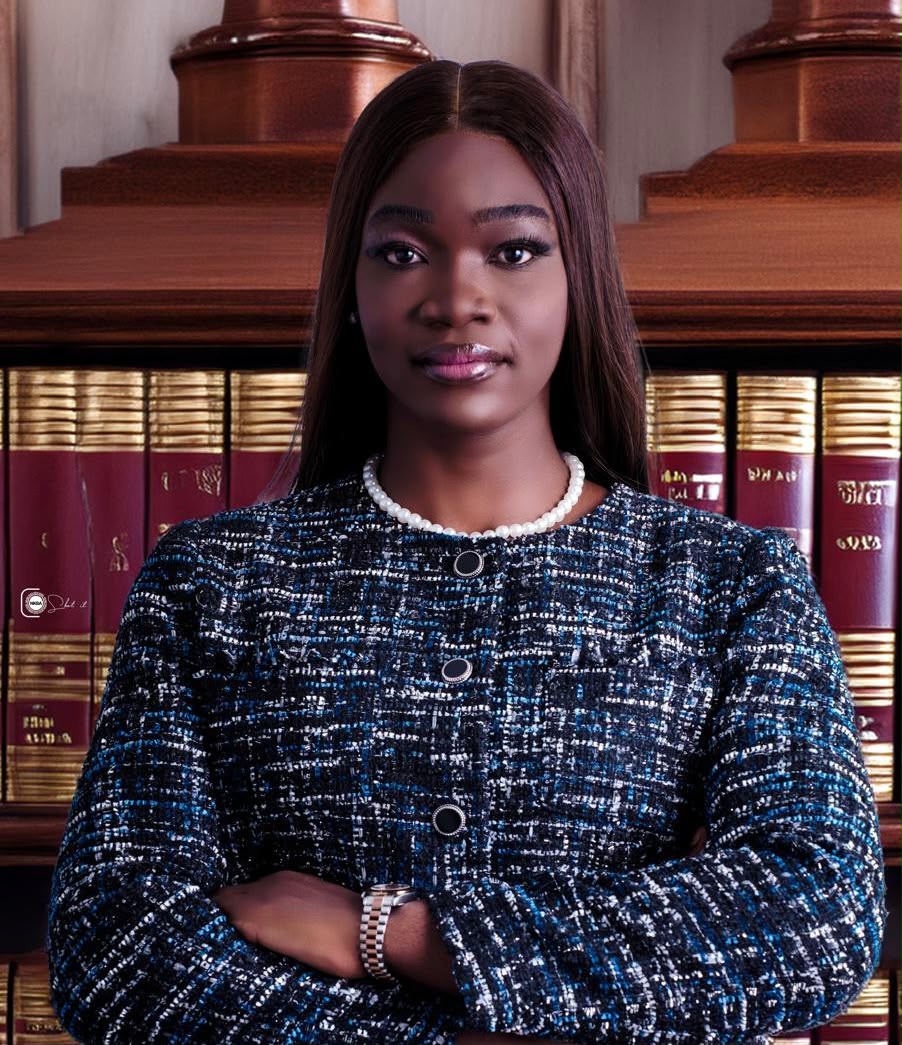
Akua Boakyewaa Mensah is a Ghanaian lawyer and UK Registered Foreign Lawyer with an LLM in Intellectual Property and Information Technology Law from the University of Derby. Her research and writing focus on advancing AI governance and technology regulation that protect human rights in the age of artificial intelligence.