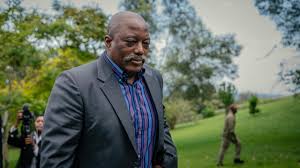
Treason trial of former DR Congo President Kabila begins
By DL News
Published
2 min read
Kabila, who ruled DR Congo for nearly two decades, faces a string of serious charges—including treason, murder, rape, torture, and leading an insurrection—over his alleged ties to the M23 rebel group, which controls vast mineral-rich territ...
The treason trial of former Democratic Republic of Congo President Joseph Kabila has begun in a military court in Kinshasa, marking a historic and controversial chapter in the country’s post-conflict journey.
Kabila, who ruled DR Congo for nearly two decades, faces a string of serious charges—including treason, murder, rape, torture, and leading an insurrection—over his alleged ties to the M23 rebel group, which controls vast mineral-rich territories in the east. Prosecutors also accuse him of being one of the architects of the broader Congo River Alliance, a coalition of armed groups threatening state stability.
Kabila denies all allegations and was absent from Friday’s court session. Through his legal team, he requested to be tried in absentia, branding the case "arbitrary" and a misuse of the courts as "instruments of oppression."
President Félix Tshisekedi, Kabila’s successor and now political adversary, has publicly accused him of orchestrating the rebel movement, fueling speculation that the charges may carry political undertones. The two fell out shortly after Tshisekedi assumed office in 2019 following a bitter and contested election.
Despite a ceasefire agreement reached just last week, fighting between the government and rebel forces continues in the eastern provinces. Kabila, who had been in self-imposed exile in South Africa for two years, returned to the region in May—landing in Goma, the heart of rebel-held territory.
International voices, including the United Nations and several Western governments, have pointed to evidence suggesting Rwandan backing of the M23 rebels. Rwanda, however, has consistently denied the claims, insisting its actions are defensive—to contain the conflict from spreading across its borders.
Kabila’s prosecution was made possible after the DR Congo Senate, in a rare move, voted in May to strip him of his lifetime immunity—a privilege granted to all former presidents. This paved the way for criminal proceedings to begin.
According to the charge sheet, Kabila is accused of working with external actors, including Rwanda, to topple the current government and forcibly occupy Goma—one of the most strategic cities in eastern DR Congo.
His political allies are furious. Ferdinand Kambere, a former executive in Kabila’s now-banned PPRD party, condemned the proceedings as political persecution. “The government is soft in negotiating with rebels but hard on Kabila. This is nothing but a show trial,” he told reporters. Similarly, Emmanuel Ramazani Shadary, Kabila’s one-time presidential candidate, dismissed the entire process as “theatre with a pre-written ending.”
In May, Kabila released a now-deleted YouTube video in which he denounced the Congolese government as a “dictatorship” and lamented a "decline of democracy." Government spokesperson Patrick Muyaya swiftly dismissed the statement, saying Kabila “has nothing to offer the country.”
At Friday’s session, the court adjourned the case to the end of the month at the request of prosecutors, who asked for more time to review key documents.
Responding to critics, Deputy Justice Minister Samuel Mbemba was unequivocal: “Justice does not negotiate. It does not align with politics. The clock of the judiciary runs on a different rhythm from that of the political arena.”
The trial now looms as a potential flashpoint in an already volatile political and security climate, with many observers watching closely to see whether the pursuit of justice in DR Congo will rise above the nation’s entrenched divisions.