

Results for "Foreign affairs"
62 results.
Opinion
Incorporating Companies in Ghana: Legal Requirements for Companies Limited by Shares and Companies Limited by Guarantee
Elizabeth Asantewaa Ofori and Rosebella Nueki Thompson


Opinion
Contemplating Appeal of Widow Wars: Can Daddy Lumba’s Legendary Love Story Survive the Courtroom? A Comprehensive Analysis of the High Court Judgment in Suit No. GJ12202026
The High Court judgment in Suit No. GJ12202026 upheld the validity of a customary marriage over a contested foreign civil marriage, emphasizing evidentiary shortcomings in proving the latter. The article evaluates the court’s reasoning and...
Kofi Annan

Opinion
The cabotage regime: Any lessons for Ghana?
The author urges Ghana to take lessons and strategic considerations in passing a Cabotage regime that is progressive, practical and with some degree of liberalisation. Find out why.
Chief Obosu Mohammed

Opinion
Killing me softly: How Ministry of Foreign Affairs’ “authentication” directive is sending the “omnia praesumuntur” rule to an early grave
The author disagrees with the Ministry of Foreign Affairs’ recent decision to reject all official documents presented for attestation without a further act of authentication by the issuing official. See her full reasoning in this article
Francisca Serwaa Boateng, Esq.

Opinion
Klomega (no.2) v. Attorney-general, Ghana Ports and Harbours Authority and others: A missed opportunity to strengthen public financial management
The author examines the Court’s decision in Klomega and its implications for public financial management and accountability.
Nicholas Opoku
Opinion
Ghana Is Punishing Speech with a Law from 1839
The article argues that Ghana’s continued use of criminal offences such as “offensive conduct” and “publication of false news” undermines constitutional free speech protections and revives colonial-era tools of speech control. It also criti...
Martin Waana-Ang

Opinion
Tear Them Down to Pieces: The Marriage Between Divorce and Corporate Insolvency
This article explores the intricate relationship between divorce and corporate insolvency, particularly when married couples are business partners. It discusses how personal turmoil can destabilize a company, leading to potential insolvency...
Samuel Alesu, Esq.
Opinion
Rethinking Article 68(5) of the 1992 Constitution – Taxation of the Emoluments of the President of the Republic of Ghana – An Introspection
The author in this article examines some recent events, the historical or constitutional basis for why Ghana's President is exempted from paying taxes on his salary and explores the need to rethink this position of the law
Frederick Gurah Sampson
Opinion
The Harmonious Dance of Trade: Ghana's Urgent Call to Embrace the CISG and Unify the Rhythms of Commerce
Over four decades ago, Ghana signed the United Nations Convention on Contracts for the International Sale of Goods (CISG), a pivotal treaty that provides a standardized legal framework for cross-border transactions between parties from diff...
Joel Telfer Jnr
Opinion
The Maze of Complexity: Unravelling the Knots of Judicial Discretion in Re Republic vrs. Speaker of Parliament and Attorney General, Ex Parte: Rockson-Nelson Etse K. Dafeamekpor Suit No. GJ/0560/2024.
The article critiques the High Court's refusal to grant a mandamus order compelling the President of Ghana to act on the Human Sexual Rights and Family Values Bill, despite its passage in Parliament. The court's decision is argued to be pre...
Nii Kpakpo Samoa Addo ESQ.
Opinion
Invoking the Supervisory Jurisdiction of the Supreme Court of Ghana. The Case of a Meddlesome Interloper (Busybody)
The Ghanaian courts have allowed the efflorescence of legal doctrines as necessary nutrients for the enjoyment and development of rights and obligations under the law within the Ghanaian jurisdiction. One such procedural doctrine is LOCUS S...
Kwame Richard Klu and Kwame Yaro Appiah
Opinion
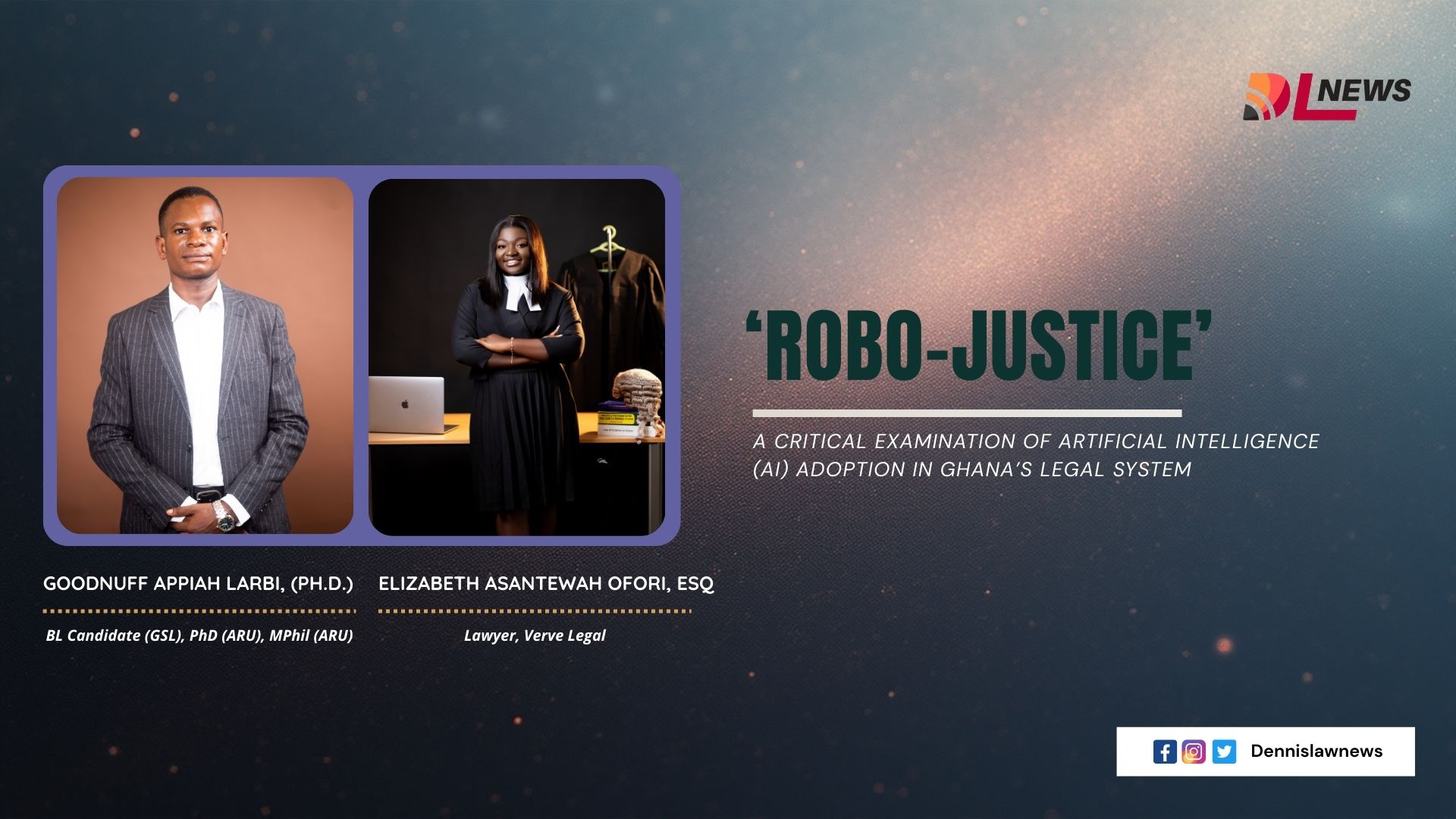
‘Robo-Justice’: A Critical Examination of Artificial Intelligence (AI) Adoption in Ghana’s Legal System
The article explores how AI is reshaping Ghana's legal system, emphasizing both its efficiency benefits and the ethical and procedural risks it poses. It concludes that while AI can aid legal processes, it cannot replace human judgment, and...
Elizabeth Asantewaa Ofori and Goodnuff Appiah Larbi
Opinion
Understanding the energy impacts of the Maduro arrest
The article argues that the reported Maduro arrest should be understood not only as a geopolitical event, but as an energy law and policy shock. It explains how legal risk, sanctions, dollar-priced energy trade, and currency pressure can af...
Lom Nuku Ahlijah
Opinion
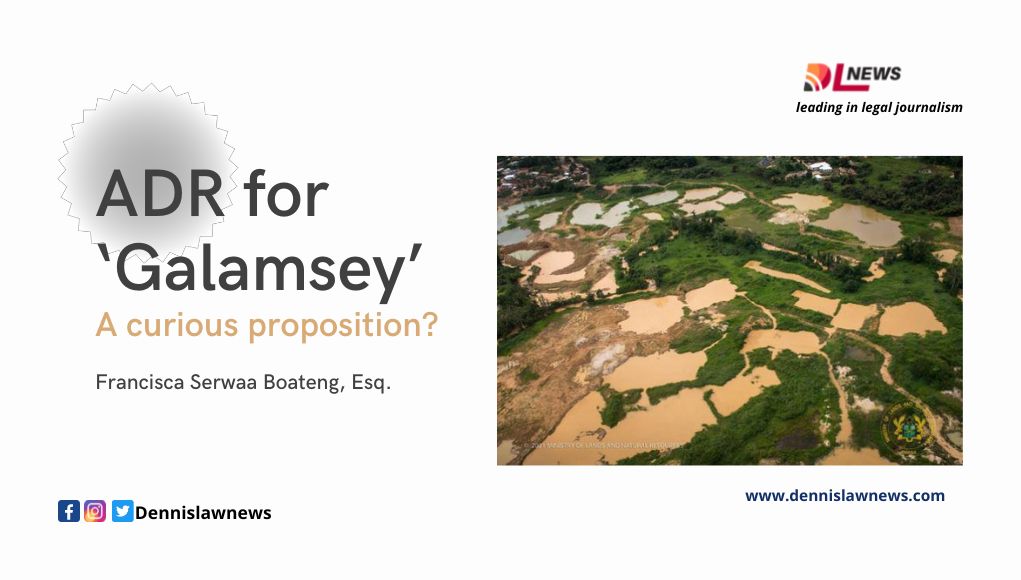
ADR for ‘Galamsey’: A curious proposition?
This article gives an overview and explores the use of ADR in settling disputes. In particular, the article discusses the suggestion that has been made recently, proposing the use of ADR to handle ‘galamsey’ cases.
Francisca Serwaa Boateng
Opinion
Revisiting the Right to Counsel in Light of the Introduction of Plea Bargaining in Ghana
This paper seeks to discuss the general right to counsel, its current application in Ghana, and how the right is central to the effective administration of plea bargaining.
E. K. Bidzakin
Opinion
“Agent For Plaintiff”: A Fatal Misnomer; Why Ghanaian Lawyers Are Unwittingly Forfeiting Their Protections Through the Misdescription of Counsel in Ghanaian Civil Procedure: An Analysis of the Doctrine of Solicitor-Solicitor Agency vs. Lawyer-Client Reality
The article argues that endorsing a writ with “Agent for Plaintiff” wrongly treats the lawyer-client relationship as an agency relationship, whereas Order 2 rule 5(1)(b) of C.I. 47 concerns one lawyer acting as agent for another lawyer. It...
Sedinam Awo Kwadam and Kwadwo Owusu-Ansah
Opinion
‘Article 71’ Office Holders and Retiring Emoluments, When Ex Gratia Meets Nemo Dat Quod Non Habet, Russia-Ukraine War, and during Debt Exchange – Reflections of a Citizen, Not a Spectator!!!
The article explores the subject of ex gratia paid to Article 71 office holders and questions its relevance under Ghana's socioeconomic situation and the legal principle of Nemo Dat Quod Non Habet
Frederick Gurah Sampson