

Results for "Kodadja principle"
92 results.
Opinion
Right to Sue on Behalf of the Family: Settled Principles & Unsettling Surprises
Justice Alexander Osei Tutu
Opinion
The Termination Tightrope: Navigating the Balance between Employer Rights and Employee Protections
This article examines the tension between employer rights and employee protections in Ghana's labor law, particularly regarding termination. It critiques the Supreme Court's reliance on outdated common law principles that allow employers to...
Martin Waana-Ang & Joshua Mbowura
Opinion
Natural Resources, The Environment and the Constitutional Review Committee’s Recommendations: Why Government Should Reconsider Its Position
The article critiques the Government of Ghana’s rejection of proposed constitutional reforms on natural resource governance and environmental protection. It advocates stronger constitutional safeguards for public trusteeship, sustainability...
Anthony Danquah
Opinion
Power to Alienate & Capacity to Litigate: When the Rule Swallowed the Exceptions
In this article, the author examines the exceptions to the principle that the power to alienate property is linked with the capacity to litigate. By exploring various legal cases and statutory provisions, the author demonstrates that these...
Justice Alexander Osei Tutu

Opinion
The doctrine of stare decisis parades in a fanciful new robe in the Supreme Court: Ex Parte Opuni (No. 2)
The author asks, among other things, if a High Court must follow a decision of a higher court at all costs under the doctrine of stare decisis. See more in this article.
Francisca Serwaa Boateng
Opinion
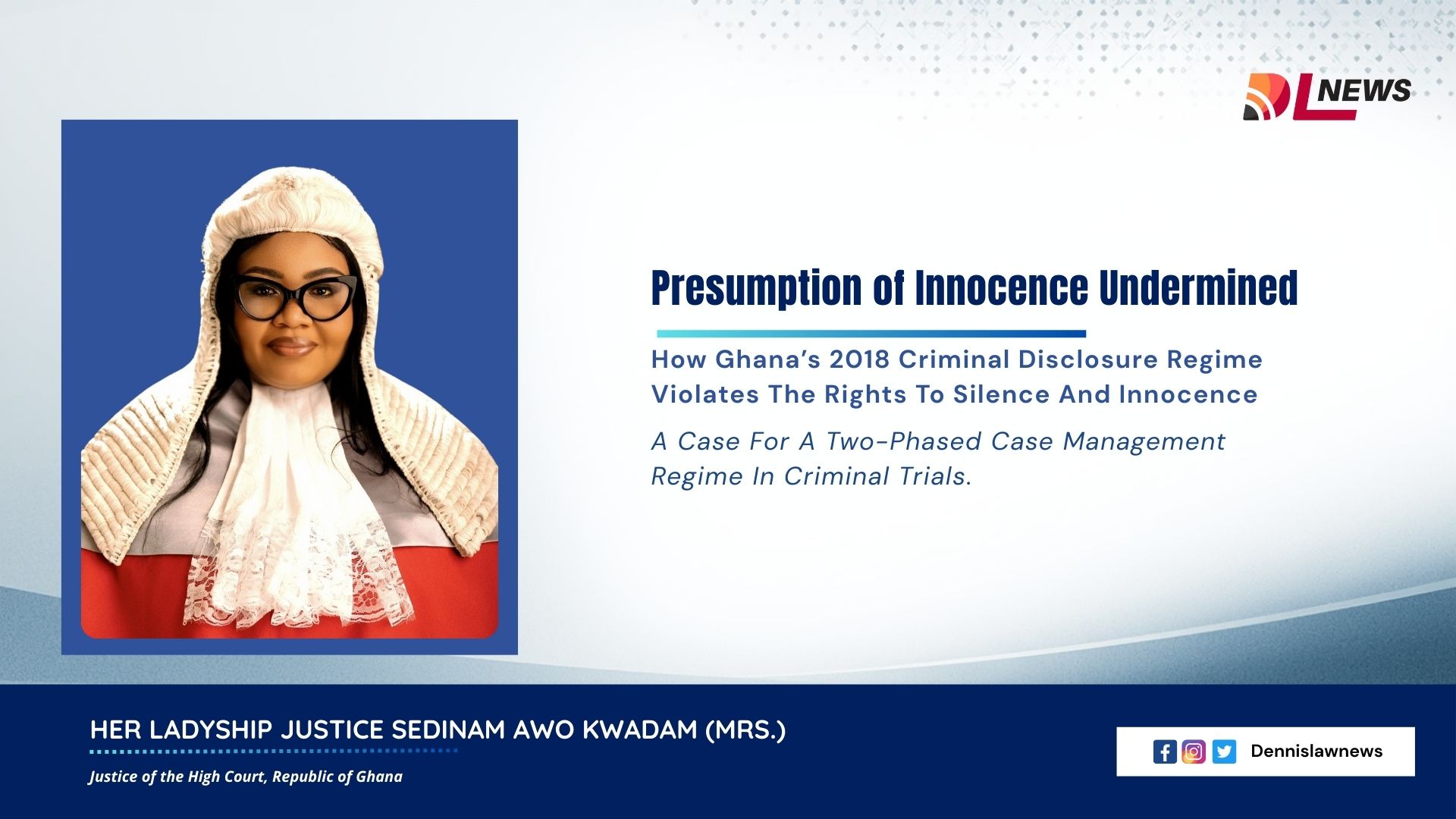
The Pretrial Detainee in Ghanaian Civil Litigation: A Constitutional and International Human Rights Appraisal of Order 73 Of C.I. 47 and Order 12 of C.I. 59; A Case for the Expungement of Absconding Warrants from Ghanaian Civil Procedure
This article argues that Ghana's civil procedure rules—specifically Order 73 of C.I. 47 and Order 12 of C.I. 59—violate constitutional and international human rights by allowing pretrial detention of civil defendants based solely on unprove...
Sedinam Awo Kwadam
Opinion
Vehicles Do Not Commit Crimes: Registered-Owner Liability, the Presumption of Innocence, and the Legality of TRAFFITECH-GH
The article challenges the legality of Ghana’s TRAFFITECH-GH system, arguing that registered vehicle owners cannot automatically be held criminally liable for traffic offences committed by others. It contends that such liability violates th...
Albert Gyamfi Esq.
Opinion
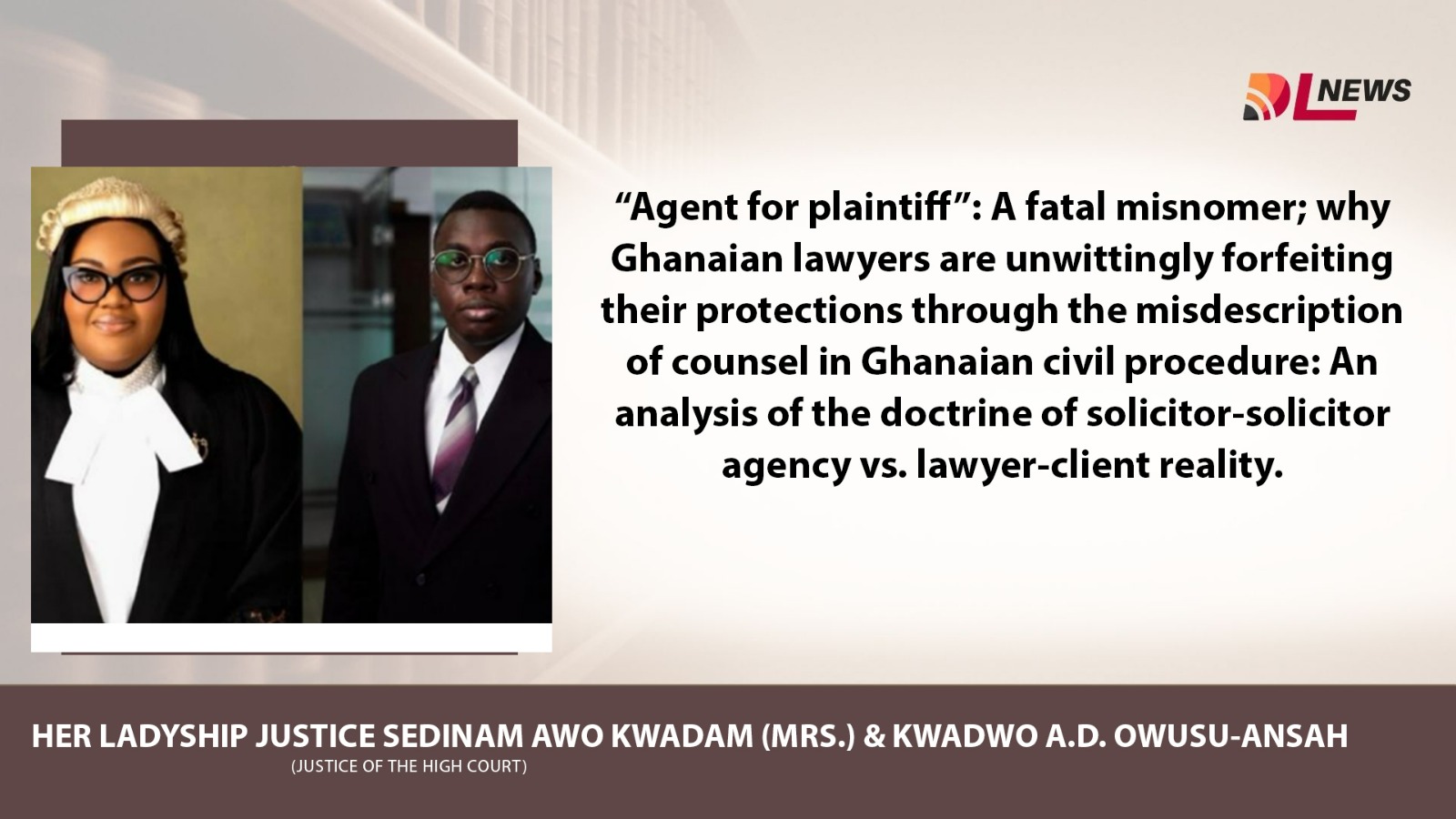
“Agent For Plaintiff”: A Fatal Misnomer; Why Ghanaian Lawyers Are Unwittingly Forfeiting Their Protections Through the Misdescription of Counsel in Ghanaian Civil Procedure: An Analysis of the Doctrine of Solicitor-Solicitor Agency vs. Lawyer-Client Reality
The article argues that endorsing a writ with “Agent for Plaintiff” wrongly treats the lawyer-client relationship as an agency relationship, whereas Order 2 rule 5(1)(b) of C.I. 47 concerns one lawyer acting as agent for another lawyer. It...
Sedinam Awo Kwadam and Kwadwo Owusu-Ansah
Opinion
The Intricacies of Hearsay Evidence: A Legal Conundrum
The article critiques the complex application of the hearsay rule in Ghanaian law despite statutory reforms under the Evidence Act, 1975 (NRCD 323). It argues that the trial judge in the Opuni case misapplied the law by relying on an inappl...
Derick Adu-Gyamfi

Opinion
Allodial interest under the Land Act, 2020: Some thoughts
The article discusses the position and seeming challenges with allodial interests under Ghana's Land Act, 2020
Justice Alexander Osei Tutu

Opinion
Better off divorced than widowed?
The author discusses whether or not women are better off divorced with regard to their access to spousal property during the dissolution of the marriage compared to what pertains upon the death of a husband intestate given the current appli...
Afia Serwah Asare-Botwe
Opinion
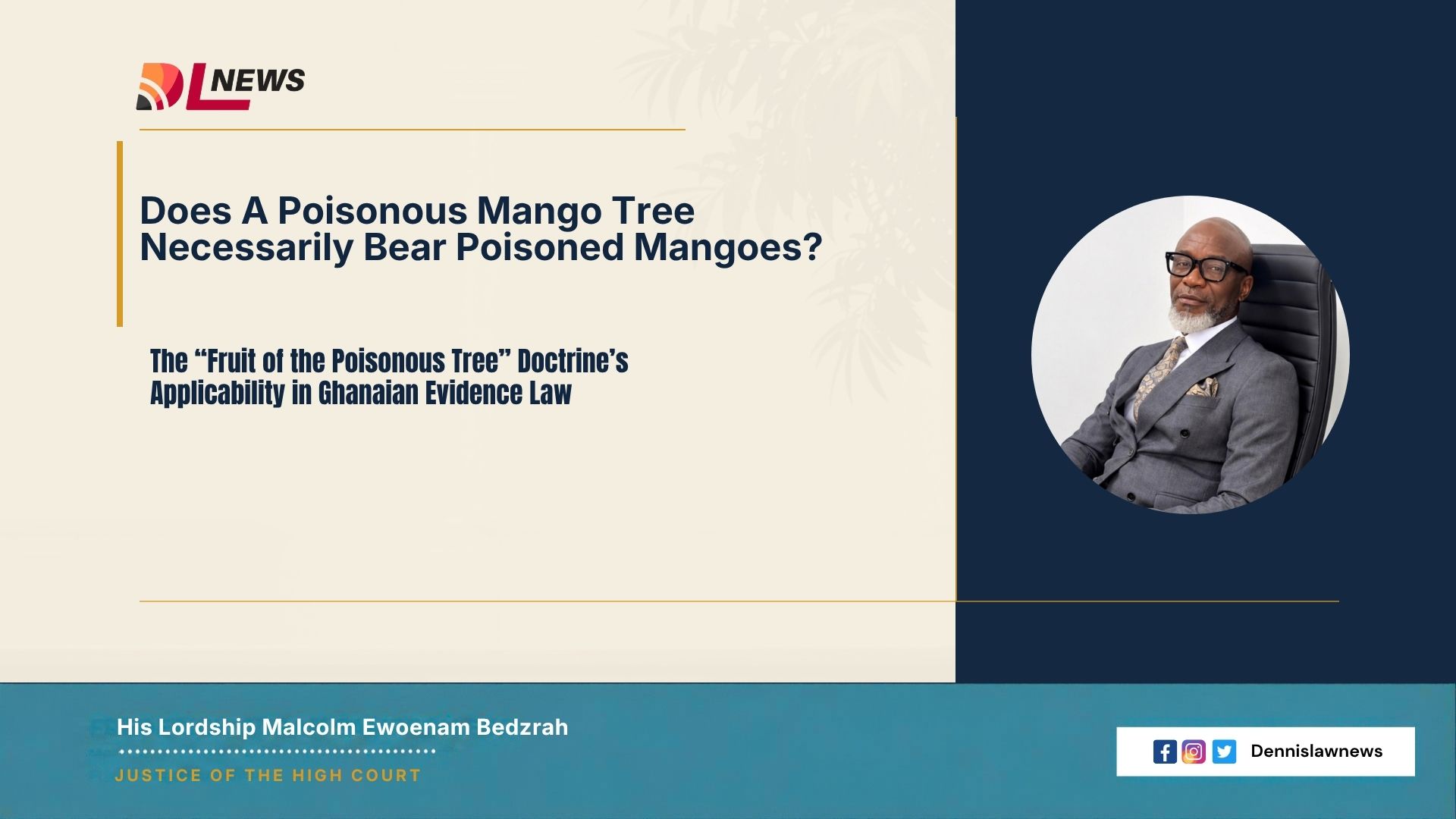
Does A Poisonous Mango Tree Necessarily Bear Poisoned Mangoes?: The “Fruit of the Poisonous Tree” Doctrine’s Applicability in Ghanaian Evidence Law
The article examines the “fruit of the poisonous tree” doctrine and how Ghanaian courts deal with evidence obtained through unlawful or unconstitutional means. It explains that, following Raphael Cubagee v Michael Yeboah Asare & Others, Gha...
HH Malcolm Bedzrah
Opinion
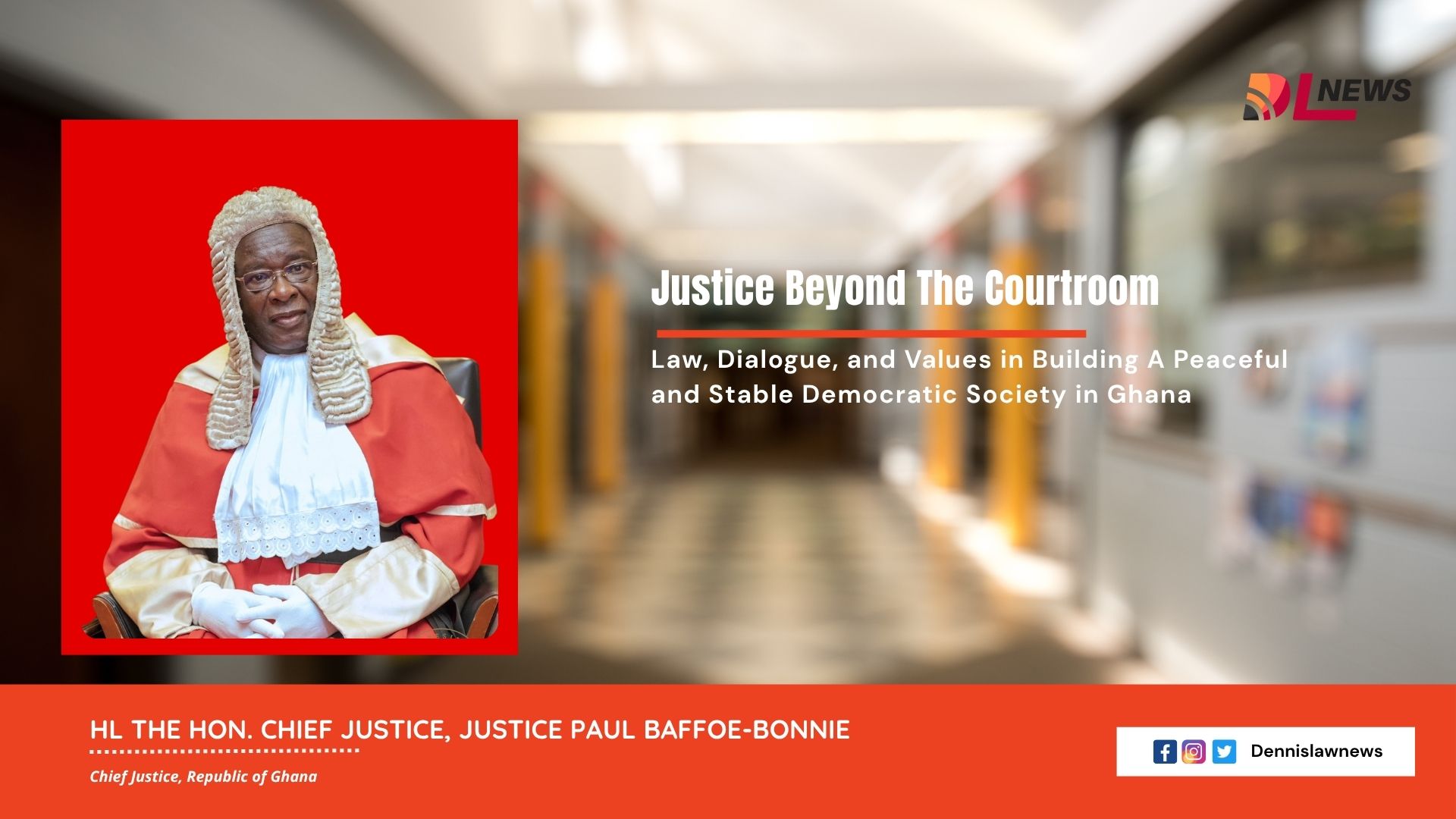
Justice Beyond The Courtroom: Law, Dialogue, and Values in Building A Peaceful and Stable Democratic Society in Ghana
This lecture argues that justice in Ghana must extend beyond courts into homes, schools, communities, and public institutions, where dialogue, fairness, and accountability are first learned and practised. It contends that a peaceful and sta...
Justice Paul Baffoe-Bonnie
Opinion
Essential things to know about Separability of arbitration agreement
The author examines the notion of separability of arbitration agreement within the realm of contracts, bringing further clarity to the doctrine and advocating for the rejection of this antiquated and impractical idea
Michael Sumaila
Opinion
The departure which must itself be departed from-Comment on the Supreme Court Decision of GHANA TELECOMMUNICATIONS CO. LTD & ANOR v ATTA VI.
This writer submits that the Ogyeadom case could never, as perceived by the Court, have settled the question whether or not the Court is jurisdictionally competent to entertain and grant an application for stay of execution pending the dete...
Thaddeus Sory
Opinion
Harmonizing Customary Practices and Statutory Law: The Need to Amend Ghana’s Criminal Offences Act, 1960 (Act 29) to Recognize and Enforce Customary Offences and Sanctions Across Ghanaian Communities
This article argues that whilst Ghana’s statutory criminal law (via the Criminal Offences Act 1960 (Act 29) governs codified offences, it fails to formally recognise many customary offences and sanctions entrenched in Ghanaian communities....
Kofi Annan and Nana Adwoa Serwaa Dua-Adonteng Esq.
Opinion
Roses are Red, The Statute is Stale: The Obscenity Debate and Legal Limbo of Sex Toys in Ghana
This article critiques Ghana’s outdated obscenity law under Section 281(1) of Act 29, arguing that its vague criminalization of "obscene objects" unconstitutionally endangers personal rights. It proposes legislative reform to exclude sexual...
Sedinam Awo Kwadam