
Results for "judicial commentary"
105 results.


Opinion
Unmasking the Scope of Jurisdiction of a Court and Avoiding Judicial Journalism – A Look at Anas A. Anas v Kennedy Agyapong
The article examines the scope of a court's jurisdiction and the limits of judicial commentary in the context of the Anas A. Anas v. Kennedy Agyapong case. It discusses whether a trial judge overstepped by making defamatory statements and c...
Bobby Banson
Opinion
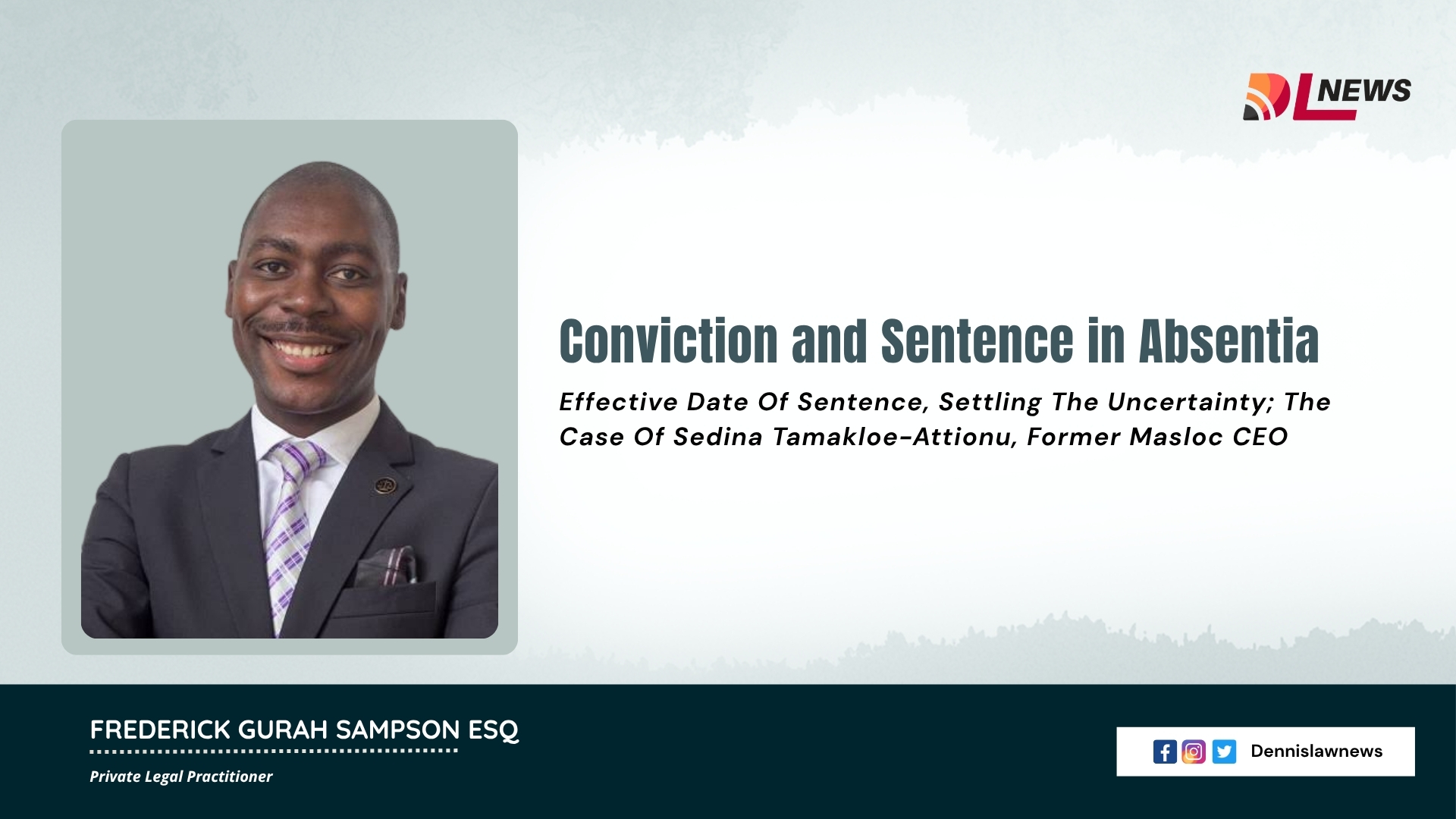
Conviction and Sentence in Absentia; Effective Date Of Sentence, Settling The Uncertainty; The Case Of Sedina Tamakloe-Attionu, Former Masloc CEO
The article examines whether a sentence imposed in absentia begins from the date it is pronounced or from when the convicted person is brought into custody. Using the Sedina Tamakloe-Attionu case, the author argues that a purposive reading...
Frederick Gurah Sampson
Opinion
The Apex Court and Junior Counsel: Distinguishing Right of Audience from Professional Maturity
The article argues that while licensed junior counsel may have a legal right of audience after pupillage, appearing alone before the Supreme Court requires more than formal entitlement. It calls for renewed mentorship, professional humility...
Samson Lardy Anyenini
Opinion
Ghana Is Punishing Speech with a Law from 1839
The article argues that Ghana’s continued use of criminal offences such as “offensive conduct” and “publication of false news” undermines constitutional free speech protections and revives colonial-era tools of speech control. It also criti...
Martin Waana-Ang
Opinion
Legal Vacation Without ‘Vacation.’; The Plight of ‘ORAL ’ Lawyers and the Infringed Rights of the Accused?
The article examines the controversy over substantive criminal trials continuing during Ghana’s legal vacation, particularly where defence lawyers have indicated that they are unavailable. It argues that although the Chief Justice has autho...
Frederick Gurah Sampson
Opinion
Judicial Review of Administrative Action in Ghana: Lessons from the Cases of Ex Parte Ernest Thompson and Ex Parte Hoda Holdings Limited
This article examines judicial review of administrative actions in Ghana, focusing on the cases Ex Parte Ernest Thompson and Ex Parte Hoda Holdings Limited. It analyzes the distinction between the High Court's supervisory and judicial revie...
Kenneth Atsu Dogbey & Martin Waana-Ang
Opinion
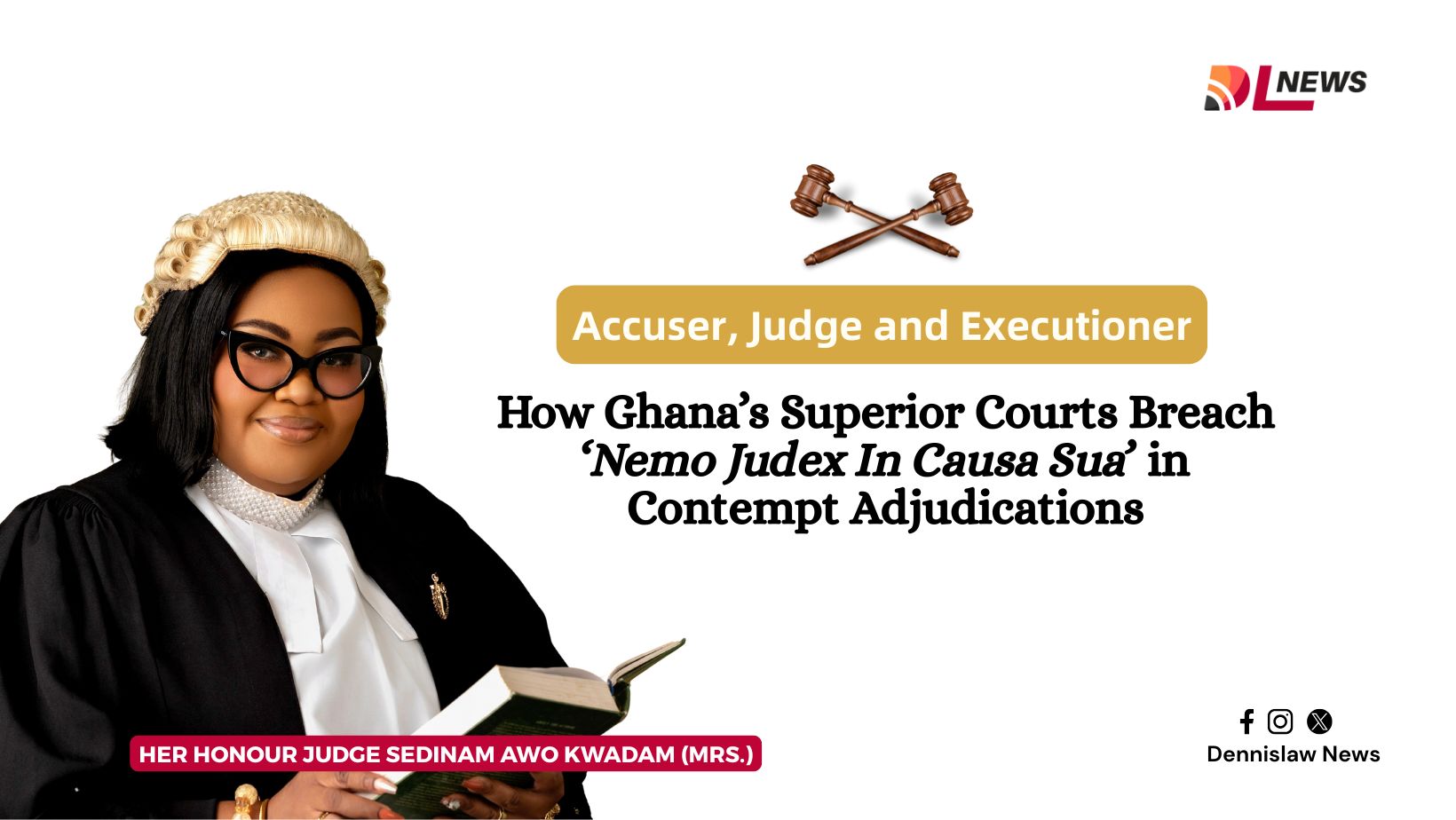
Accuser, Judge and Executioner: How Ghana’s Superior Courts Breach ‘Nemo Judex In Causa Sua’ in Contempt Adjudications; A Wakeup Call for Comprehensive Procedural Rules to Guide Contempt Proceedings
This article critiques the practice in Ghana's Superior Courts where Justices adjudicate contempt cases arising from their own proceedings, violating the rule of nemo judex in causa sua. It advocates for urgent procedural reforms to ensure...
Sedinam Awo Kwadam
Opinion
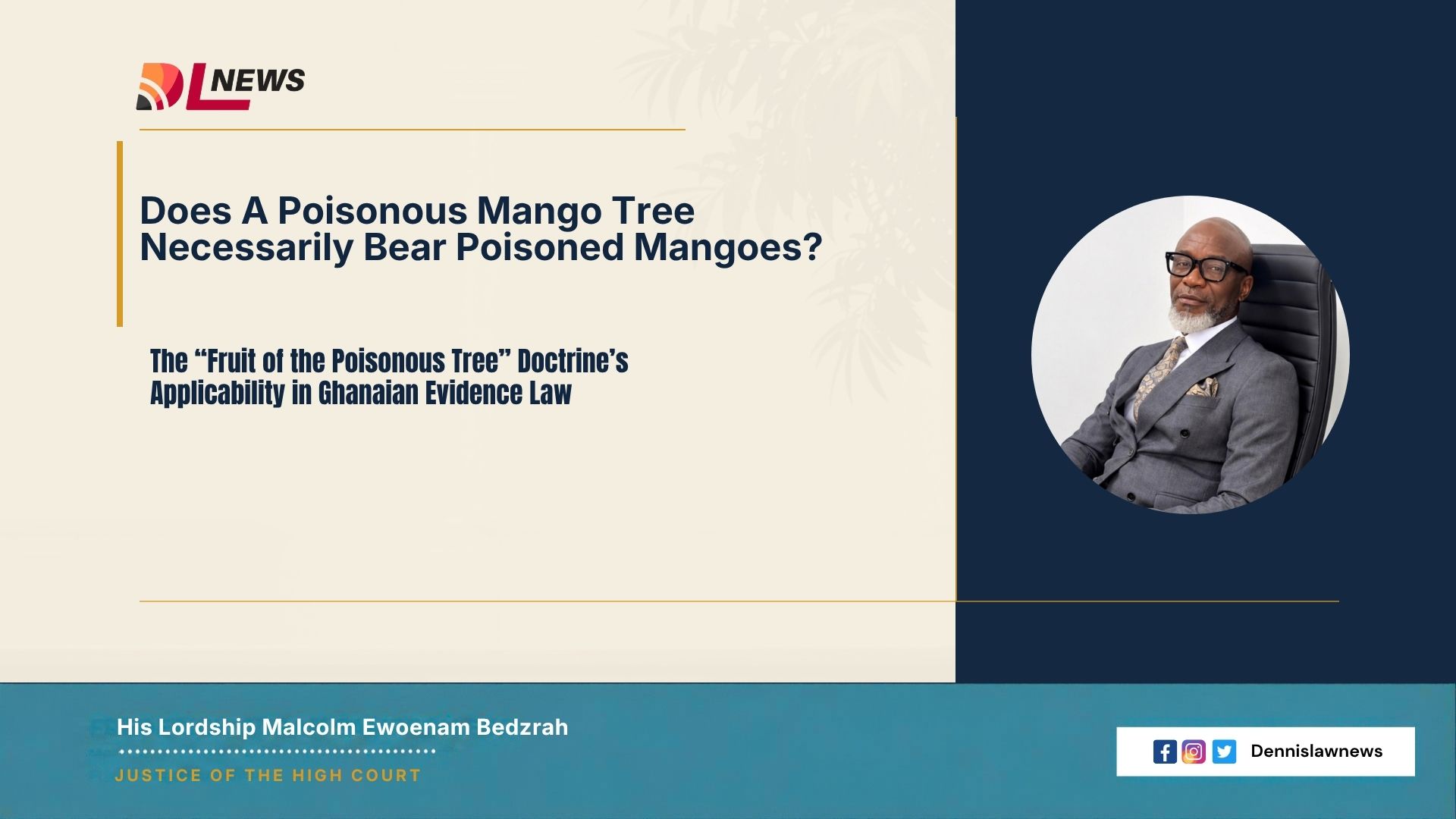
Does A Poisonous Mango Tree Necessarily Bear Poisoned Mangoes?: The “Fruit of the Poisonous Tree” Doctrine’s Applicability in Ghanaian Evidence Law
The article examines the “fruit of the poisonous tree” doctrine and how Ghanaian courts deal with evidence obtained through unlawful or unconstitutional means. It explains that, following Raphael Cubagee v Michael Yeboah Asare & Others, Gha...
HH Malcolm Bedzrah
Opinion
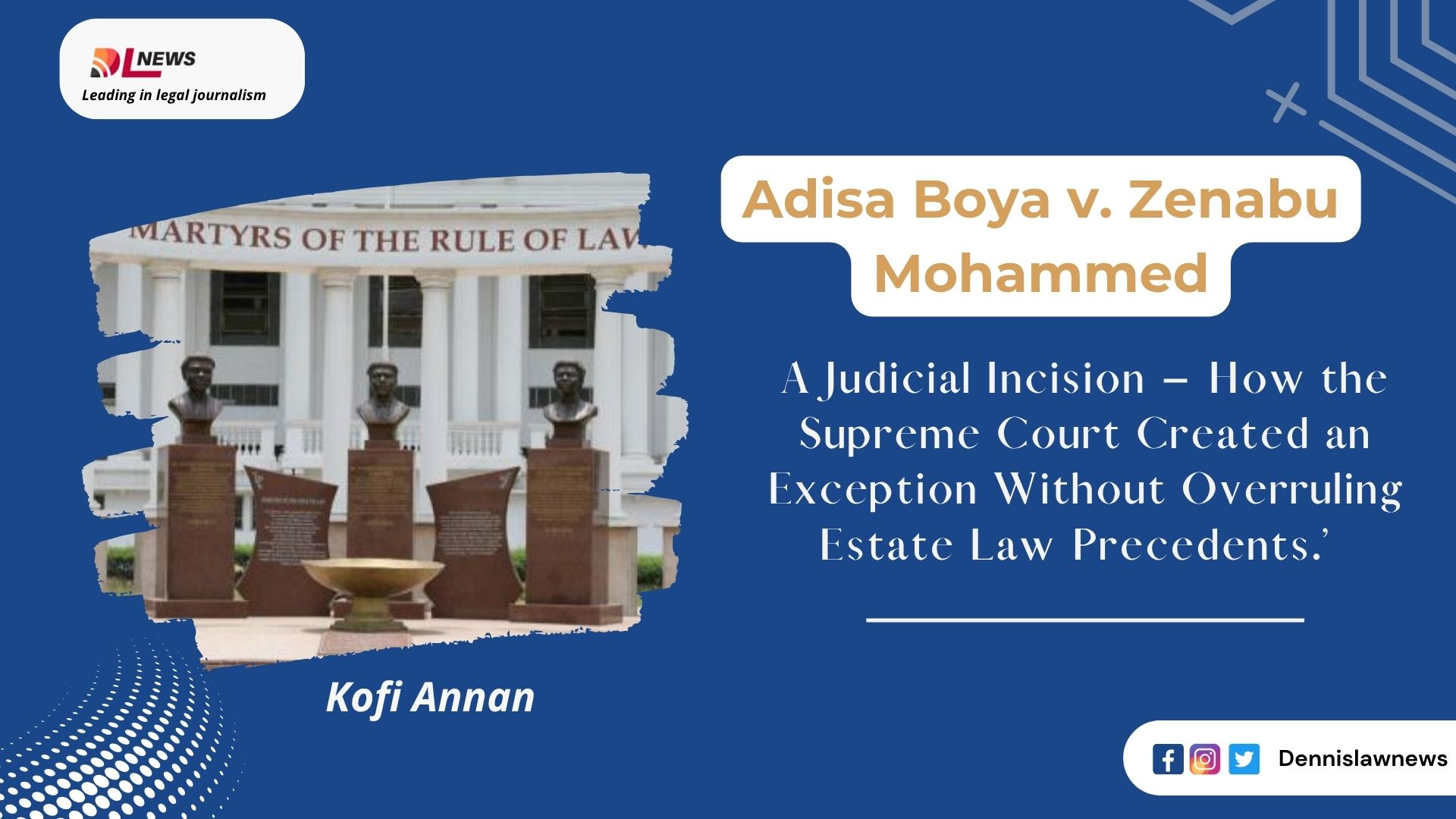
Adisa Boya v. Zenabu Mohammed: A Judicial Incision – How the Supreme Court Created an Exception Without Overruling Estate Law Precedents.
An analysis of Adisa Boya v. Zenabu Mohammed, where the Supreme Court carved out an exception to estate law by allowing intestate heirs to sue without Letters of Administration, balancing legal formality with justice.
Kofi Annan
Opinion
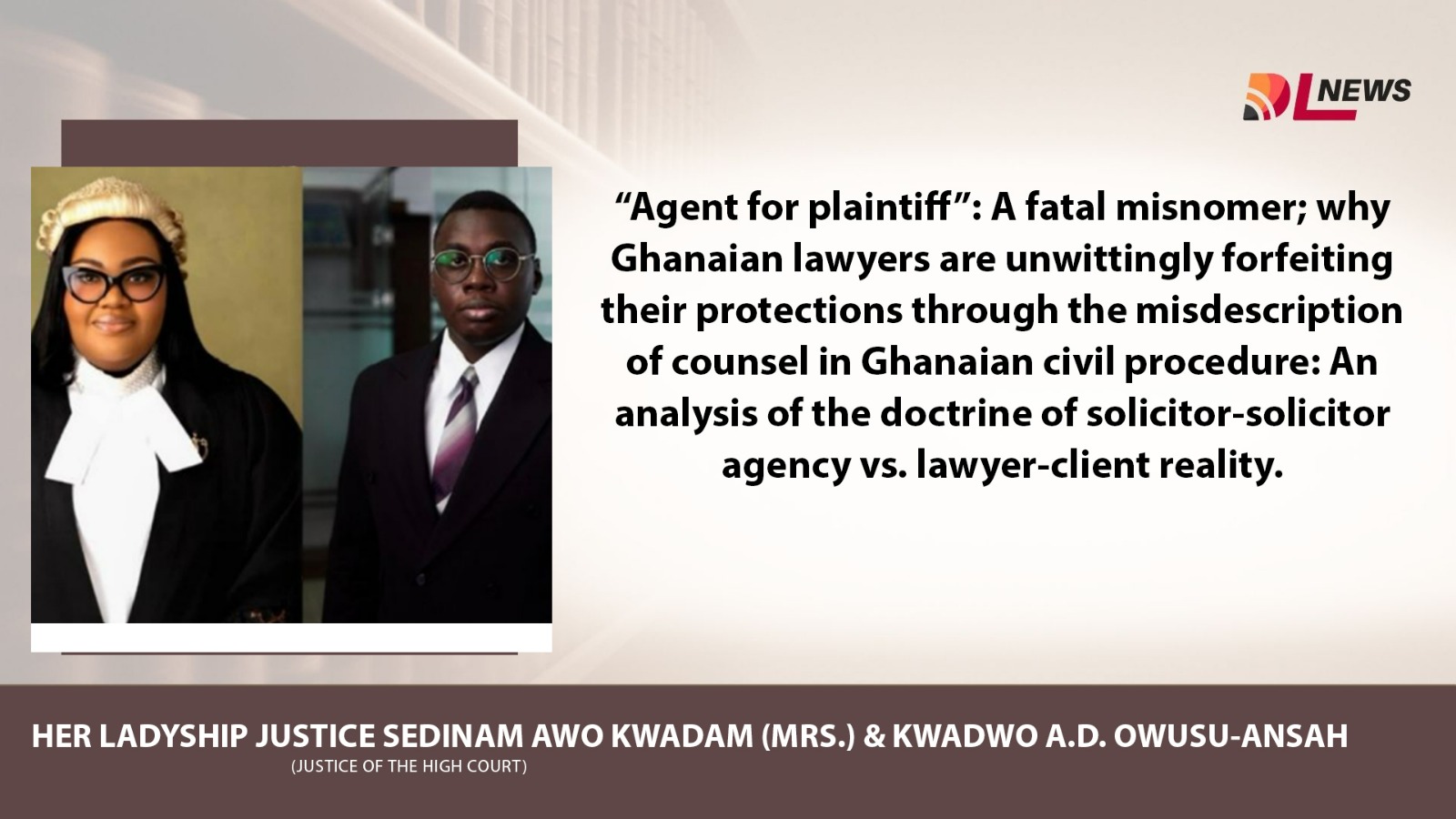
“Agent For Plaintiff”: A Fatal Misnomer; Why Ghanaian Lawyers Are Unwittingly Forfeiting Their Protections Through the Misdescription of Counsel in Ghanaian Civil Procedure: An Analysis of the Doctrine of Solicitor-Solicitor Agency vs. Lawyer-Client Reality
The article argues that endorsing a writ with “Agent for Plaintiff” wrongly treats the lawyer-client relationship as an agency relationship, whereas Order 2 rule 5(1)(b) of C.I. 47 concerns one lawyer acting as agent for another lawyer. It...
Sedinam Awo Kwadam and Kwadwo Owusu-Ansah

Opinion
Rethinking Legal Education in Ghana: From Rote Memorization to Open-Statute Exams For A New Era of Legal Competence and Mastery
The article examines the current state of legal education in Ghana, highlighting its challenges and proposing reforms to make it more effective, accessible, and aligned with modern legal practice.
Sedinam Awo Kwadam

Opinion
My Lord! To be or not to be? [Part 1]
This article examines the process of becoming a judge in Ghana, outlining the recruitment procedures, conditions of service, postings, transfers, leadership expectations, and the exclusivity of judicial roles. It provides insights into the...
Bertha A. Aniagyei

Opinion
Part 2: My Lord! To be or not to be
This second part of the article explores the challenges judges in Ghana face after assuming office, including external pressures, political interference, social reclusiveness, security risks, and mental health struggles. It highlights the e...
Bertha A. Aniagyei
Opinion
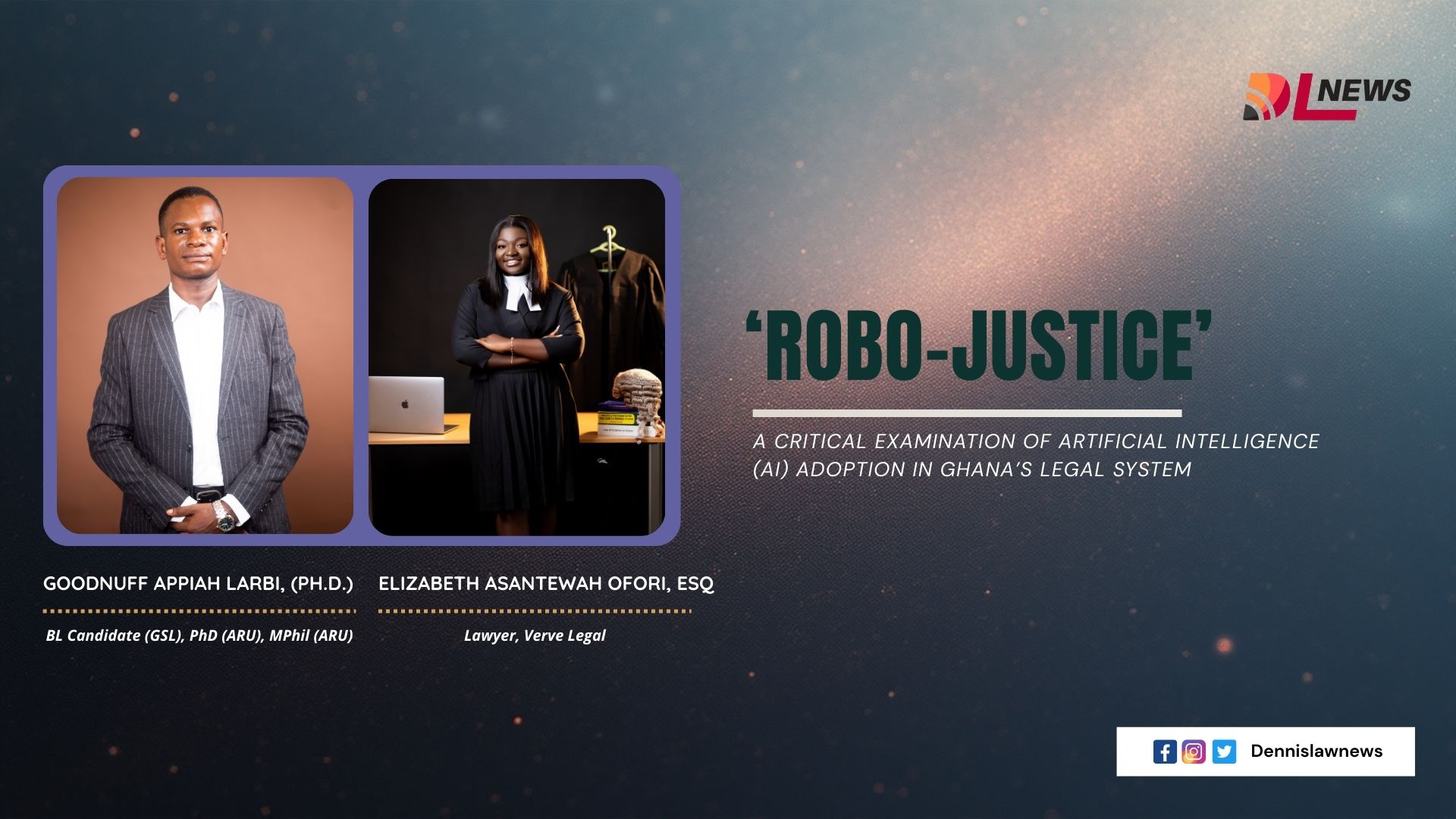
‘Robo-Justice’: A Critical Examination of Artificial Intelligence (AI) Adoption in Ghana’s Legal System
The article explores how AI is reshaping Ghana's legal system, emphasizing both its efficiency benefits and the ethical and procedural risks it poses. It concludes that while AI can aid legal processes, it cannot replace human judgment, and...
Elizabeth Asantewaa Ofori and Goodnuff Appiah Larbi
Opinion
‘Article 71’ Office Holders and Retiring Emoluments, When Ex Gratia Meets Nemo Dat Quod Non Habet, Russia-Ukraine War, and during Debt Exchange – Reflections of a Citizen, Not a Spectator!!!
The article explores the subject of ex gratia paid to Article 71 office holders and questions its relevance under Ghana's socioeconomic situation and the legal principle of Nemo Dat Quod Non Habet
Frederick Gurah Sampson
Opinion
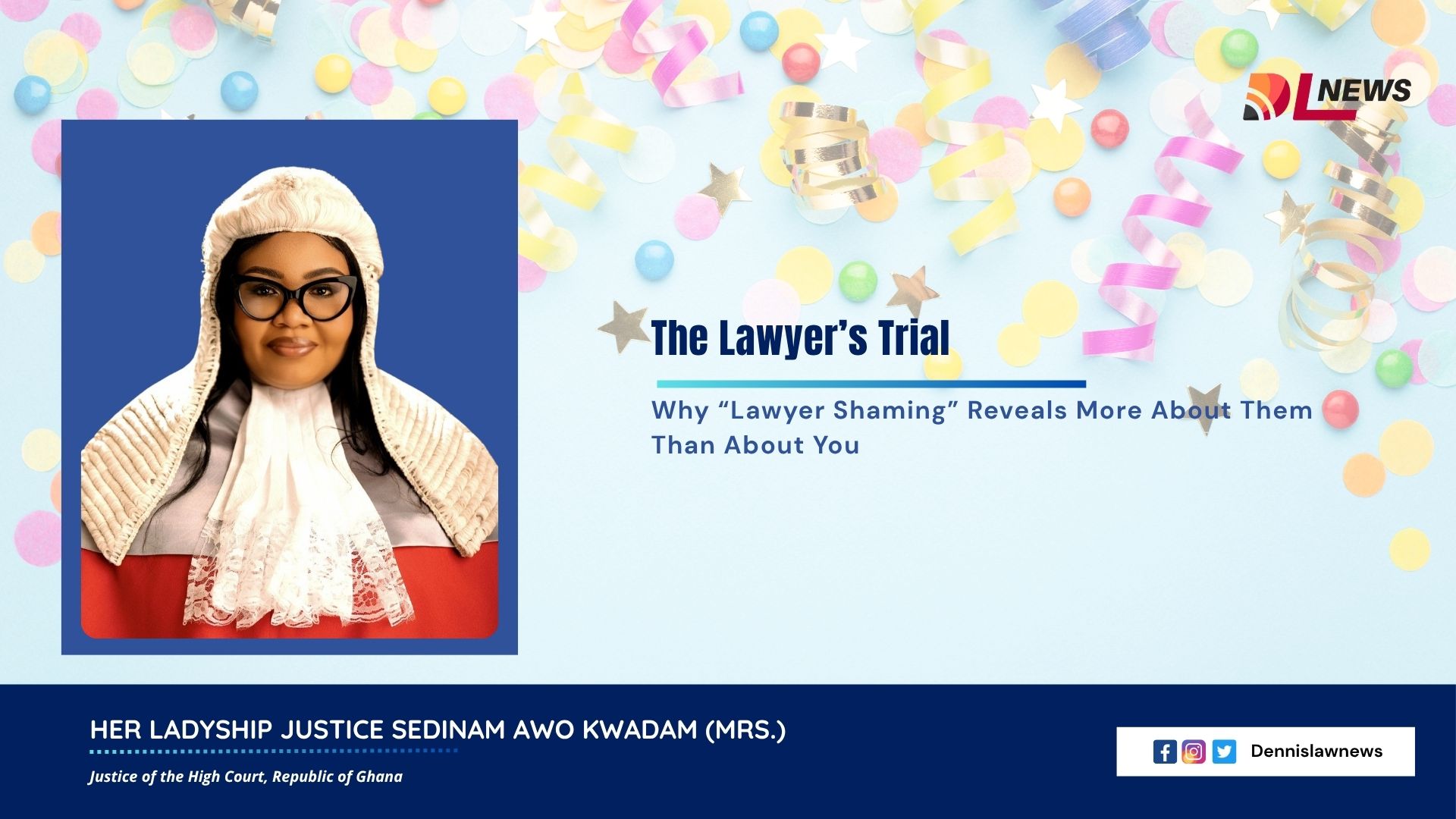
The Lawyer’s Trial: Why “Lawyer Shaming” Reveals More About Them Than About You
The article argues that “lawyer shaming” is less a valid criticism of the legal profession and more a reflection of insecurity, admiration, and misunderstanding on the part of critics. It defends the dignity of legal practice by highlightin...
Sedinam Awo Kwadam