LawyersOpinion
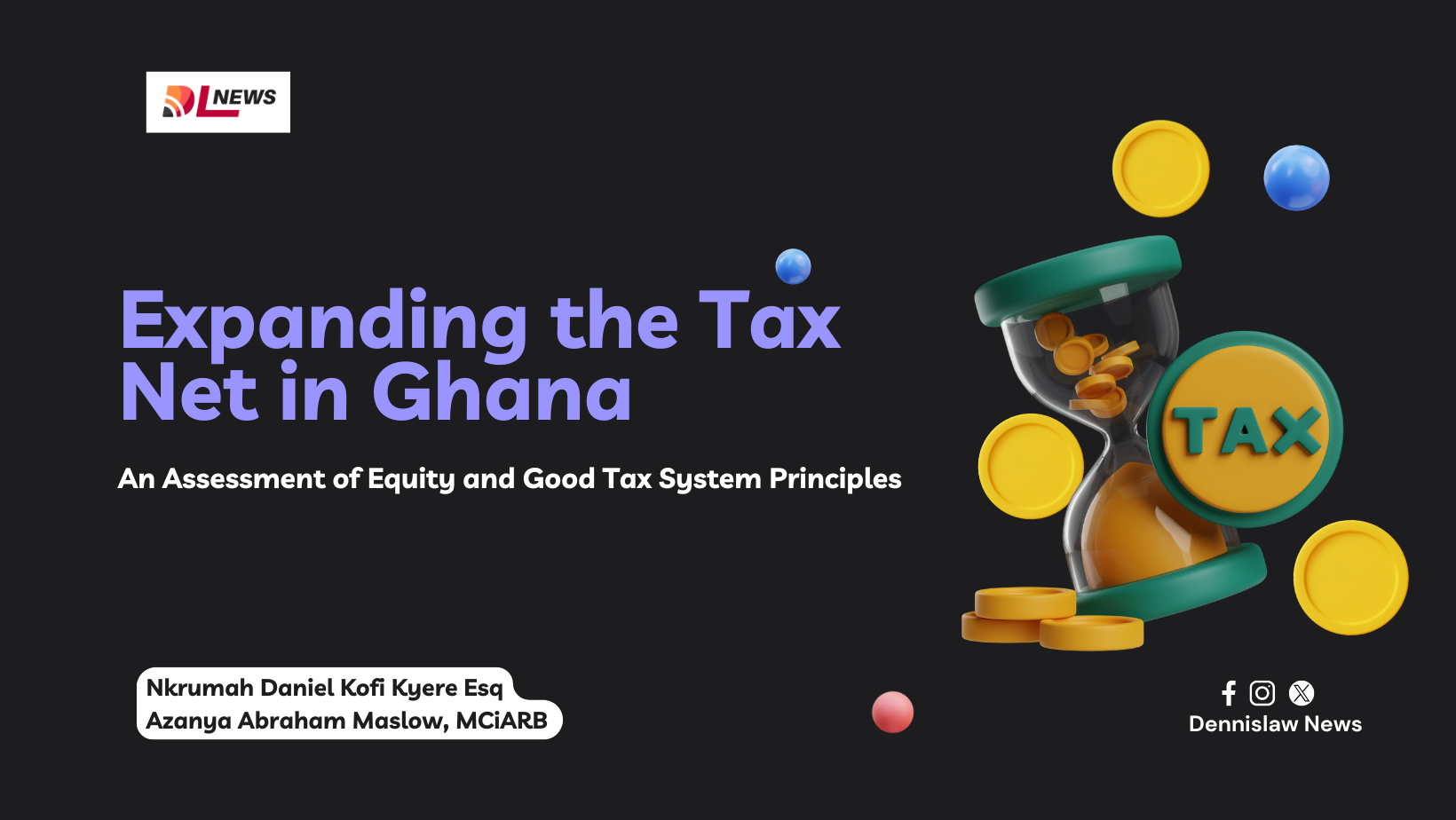
Expanding the Tax Net in Ghana: An Assessment of Equity and Good Tax System Principles
This article delves into Ghana's tax system, identifying key challenges such as informal sector integration, low compliance, and systemic complexity. It proposes reforms inspired by global best practices to improve revenue generation, equit...
Overview
This comprehensive analysis explores the intricacies of Ghana’s tax regime, identifies critical challenges, and presents strategic recommendations for reform. Drawing on successful international models, the article advocates for a tax system that not only increases government revenue but also promotes social equity and economic stability, ultimately contributing to a more prosperous future for all Ghanaians.
Objective of the Article
This article aims to assess the challenges faced by Ghana’s tax system, particularly the integration of the informal sector, and to propose actionable reforms inspired by successful practices from developed countries. By emphasizing transparency, accountability, and citizen engagement, it seeks to provide a roadmap for creating a more equitable and efficient tax system that fosters national development and economic growth in Ghana.
Introduction
Taxation is essential for the growth and sustainability of any nation’s economy, providing critical resources for public services, infrastructure, and social welfare programs. However, the effectiveness of Ghana’s tax system is significantly undermined by various challenges. This article assesses these challenges, proposes strategies to integrate the informal sector into the tax net, and draws lessons from developed countries like the US, Germany, and the UK.
Taxation and Its Benefits
Taxation is a cornerstone of any well-functioning society, serving as an essential mechanism for governance and development. In Ghana, it plays a particularly vital role in providing the government with the necessary resources to fund public services, promote economic stability, and support social welfare programs. One of the core benefits of taxation is its ability to promote economic stability and growth. Through taxation, governments can regulate the economy, redistribute wealth, and address income inequality[1].
A well-structured tax system promotes equitable resource distribution through progressive taxation, where wealthier individuals contribute a larger share.
Despite the clear advantages of a robust tax system, Ghana faces unique challenges due to the structure of its workforce. Approximately 80% of Ghana’s workforce is employed in the informal sector, often beyond the reach of government taxation and regulation. This widespread informality poses significant challenges for Ghana’s tax system, limiting government revenue and exacerbating inequality.[2]
The International Labour Organisation (ILO) defines the informal sector as comprising small and micro-enterprises operating without government oversight, leading to substantial tax evasion and a reduced tax base[3].
Challenges facing Ghana’s Tax Regime
The widening tax gap in Ghana is driven by several key challenges, including low voluntary tax compliance, a narrow tax base, negative public perception of the tax system, and institutional weaknesses in revenue mobilization. Some critical challenges include:
Dominance of the Informal Sector
The extensive informal sector complicates tax collection efforts, as many businesses and individuals evade taxes or are under-taxed. This fragmentation results in a considerable tax gap, estimated at approximately 60% of potential revenue (Ghana Revenue Authority, 2023). For instance, informal workers in markets or unregistered businesses contribute little to national revenue, limiting funds available for essential services[4].
Additionally, many businesses evade taxes or underreport income due to weak enforcement mechanisms and a perception that the tax system is corrupt or inefficient[5].
Low Tax Compliance
Low voluntary tax compliance, particularly among small and medium-sized enterprises (SMEs) and high-net-worth individuals, is a significant issue. Weak enforcement mechanisms and widespread perceptions of corruption contribute to tax evasion. A survey by the Ghana Statistical Service in 2022 indicated that over 50% of SMEs reported avoiding taxes due to perceived inefficiencies and corruption within the tax system[6].
Complexity of the Tax System
Ghana’s tax system is often viewed as overly complex, especially for small businesses and individuals lacking adequate resources. The convoluted procedures for tax filing can be confusing and time-consuming, particularly for small businesses. These discourage compliance and reinforce the notion that taxation is a burden rather than a civic duty[7].
Regressive Tax Structure
The reliance on indirect taxes, such as Value Added Tax (VAT) and import duties, disproportionately affects low-income earners. Consumption-based taxes place a heavier burden on the poor, who spend a larger portion of their income on essential goods and services, exacerbating inequality[8].
Independence of the Ghana Revenue Authority (GRA)
The GRA Act mandates that board members serve four-year terms, seemingly aligned with the sitting government’s tenure. This arrangement, combined with the president’s broad power to appoint the Commissioner-General, raises concerns about the GRA’s independence from political influence[9].
Integrating the Informal Sector into the Tax System
To effectively bridge the gap between the informal and formal sectors, a multi-faceted approach is necessary:
- Simplifying Tax Registration and Filing
Simplifying tax processes is critical to enhancing compliance among informal sector participants. The Ghana Revenue Authority (GRA) can leverage digital platforms and mobile payment systems to make the tax process more accessible.
Strategies for Simplifying Tax Registration and Filing with practical illustrations
- In South Africa, the South African Revenue Service (SARS) has implemented a straightforward online registration system for small businesses. This platform simplifies the registration process and provides step-by-step guidance, resulting in a 40% increase in registered small enterprises over the past five years.
- The UK’s HM Revenue and Customs (HMRC) developed a user-friendly digital platform for small businesses, enabling easy online tax registration and filing. In 2021, this platform led to a reported 30% increase in compliance among SMEs. Ghana could implement a similar mobile-based application to facilitate tax registration and filing.
- Incentivizing Formalization
Encouraging voluntary formalization is essential for increasing tax compliance. The government can offer incentives such as tax breaks, access to credit, and training programs, to motivate informal businesses to register[10].
Strategies for providing Incentives for Formalization of Businesses with practical illustrations
- Kenya introduced the “KRA Turnover Tax,” allowing small businesses with a turnover below a certain threshold to pay a fixed percentage of their income instead of the standard corporate tax. This incentive has encouraged thousands of informal businesses to register, resulting in a 25% increase in tax compliance among SMEs.
- Germany’s “Entrepreneurial Initiative” provides grants and support for startups, resulting in thousands of businesses transitioning to the formal economy. Ghana could adopt similar initiatives to ease the transition for informal businesses, potentially increasing formal sector participation by 15% over five years.
- Utilizing Digitalisation
With the rise of mobile money and digital payment platforms, tax authorities can better monitor income flows within the informal sector. Implementing digital tools can streamline tax collection and reduce the administrative burden on informal businesses.
Strategies for Ghana to utilise digitalisation with Practical illustration
- Rwanda has utilized digital payment systems like Mobile Money to track economic transactions within the informal sector. By partnering with telecom companies, the Rwandan government can monitor transactions, significantly increasing tax compliance rates in previously untaxed areas.
- The US IRS utilizes data analytics to track income from non-traditional sources, enhancing compliance rates. Data-driven audits have reportedly increased compliance by 20% among high-income earners. Ghana could adopt similar analytics to effectively engage informal businesses.
- Tailored Tax Models for Diverse Informal Businesses
Given the diversity within Ghana’s informal economy, a one-size-fits-all approach to taxation is unlikely to succeed. Tailoring tax models to accommodate different business sizes, types, and locations can foster compliance.
Practical Illustration:
- Vietnam employs a tiered tax system that categorizes businesses based on size and revenue. Small businesses are taxed at lower rates, while larger enterprises face standard rates. This approach has led to increased registration and compliance among informal vendors, with reports indicating a 30% rise in formal business registrations within two years.
- The UK employs a tiered approach for small businesses, allowing them to pay reduced tax rates based on their revenue. This model has led to increased compliance rates among SMEs. Ghana could establish similar thresholds to make taxation fairer for small enterprises.
- In France, the city of Paris has a unique local tax known as the “Contribution Économique Territoriale” (CET), which consists of the “Cotisation Foncière des Entreprises” (CFE) and the “Cotisation sur la Valeur Ajoutée des Entreprises” (CVAE). The CFE is based on the rental value of properties used by businesses, and the CVAE is levied on the value added by businesses, with rates varying based on local decisions. This allows Paris to generate revenue that funds infrastructure and services tailored to its dense population. Hence, Ghana can Localise its Tax Structures to achieve equity and efficiency.
Addressing Public Concerns Over Tax Utilization
Many Ghanaians express dissatisfaction with the tax system due to perceived inefficiencies in public spending and corruption. To build trust in the system, the following reforms are necessary:
Transparency in Tax Utilization
Implementing transparent budgeting processes can help citizens understand how tax revenues are used. Countries like Sweden employ open government initiatives, allowing citizens to access detailed budgetary information[11].
- Remedy for Ghana: Ghana can adopt similar measures by publishing annual reports on tax revenue allocation and expenditure, which will build trust among taxpayers.
Strengthening Accountability Mechanisms
Establishing strong accountability frameworks for public officials is crucial. The UK has robust oversight bodies that audit government spending and investigate misuse of funds.
- Remedy for Ghana: Strengthening Ghana’s auditing bodies to ensure they have the authority to investigate corruption effectively could enhance public trust. An independent ombudsman could facilitate citizen complaints regarding fund mismanagement.
Engaging Citizens in Budgeting Processes
Countries like Canada engage citizens in participatory budgeting, allowing them to have a say in how tax revenues are spent. This fosters a sense of ownership and accountability.
- Remedy for Ghana: Implementing participatory budgeting initiatives would invite community members to discuss and prioritize local projects funded by tax revenues. For example, the introduction of such a program in Accra could lead to better alignment of public spending with community needs.
Enhancing the Independence of the Ghana Revenue Authority (GRA)
Improving the GRA’s independence from political influence requires several reforms:
- Fixed Terms and Stability
Establishing longer, non-coterminous terms for board members and the Commissioner-General could reduce political pressure. Countries like Canada appoint tax authority heads for fixed terms that do not align with government elections, enhancing stability.
- Independent Appointment Processes
Creating an independent body to oversee the appointment of GRA leadership could enhance autonomy. In Australia, parliamentary oversight of tax authority appointments mitigates political interference.
- Strengthening Legislative Framework
Revising the GRA Act to stipulate clear criteria for appointments and term lengths can help safeguard against political encroachment.
- International Comparisons and Best Practices, identifying current International Ranking of Ghana’s Tax System
drawing from the successes of other countries, Ghana can adapt best practices that enhance tax compliance and revenue collection. Countries like the United States, Germany, and the United Kingdom offer models of tax systems that balance efficiency, equity, and transparency, hence, Ghana could borrow from these three countries in ensuring a balance tax system with efficiency, equity and transparency.
It worth noticing that, as of 2023, Ghana ranks 131st out of 190 countries in the World Bank’s “Doing Business” report, which assesses the ease of paying taxes (World Bank, 2023). This ranking reflects significant room for improvement in creating an effective and inclusive tax system. In contrast, countries like New Zealand and Denmark consistently rank at the top for their efficient tax systems, providing models for Ghana to consider.
- Broader Economic Impacts of Proposed Reforms
Implementing these reforms could yield substantial economic benefits for Ghana, including:
- Increased Revenue for Development: Closing the tax gap could result in an estimated additional $1 billion in annual revenue, funding crucial infrastructure projects and social services.
- Enhanced Economic Stability: A more inclusive tax system would mitigate reliance on volatile sources of revenue, leading to improved fiscal stability and resilience during economic downturns.
- Social Equity and Poverty Reduction: By redistributing wealth more effectively, these reforms could help address income inequality and improve living standards for low-income earners.
- Increased Investment: A transparent and efficient tax system could enhance Ghana’s attractiveness to foreign investors, fostering economic growth and job creation.
Conclusion
Expanding the tax net in Ghana requires a concerted effort to integrate the informal sector into the tax system while addressing public concerns about tax utilization and enhancing the independence of the Ghana Revenue Authority. By adopting practices from the countries stated above such as The US, Germany, and the UK, Ghana can improve its revenue mobilization efforts, increase compliance, and build a fairer tax system that supports national development.
The implementation of these reforms could lead to significant economic benefits, including increased government revenue for infrastructure development, improved public services, and enhanced social equity. With a transparent and accountable tax system, Ghanaians are more likely to see the tangible benefits of their contributions, fostering a culture of compliance and civic responsibility.
A robust tax system not only generates revenue but also fosters social equity and economic growth. Through transparency, accountability, and citizen engagement, Ghanaians can gain confidence that their taxes contribute to meaningful progress in their communities. Ultimately, these reforms can lead to a stronger and more prosperous nation, where every citizen feels the impact of their contributions.
Consequently, in championing the above recommendations among others with the same effects, the good tax system propounded by Adams Smith’s (1776) among his celebrated cannons of taxation, would be properly and conveniently effected in Ghana.
For ease of reminder, the canons referred to in a good tax system are:
- Equity;
- Certainty of imposition;
- Convenience of payment; and
- Economy in collection (Administrative efficiency).
---
[1] Neill, Jon R, 'The Benefit and Sacrifice Principles of Taxation: A Synthesis' (2000) 17(1) Social Choice and Welfare 117
[2] https://www2.statsghana.gov.gh/docfiles/glss6/GLSS6_Labour%20Force%20Report.pdf
[3] https://www.unescwa.org/sd-glossary/informal-sector-%E2%80%93-ilo#:~:text=Term%3A-,Informal%20sector%20%E2%80%93%20ILO,incomes%20to%20the%20persons%20concerned.
[4] Africa Centre for Energy Policy, 'Key Findings, Conclusion, and Recommendation' in Rat Race — The New State of Ghana’s Petroleum Fiscal Environment and Implications for Industry Competitiveness (Africa Centre for Energy Policy, 2016)
[5] https://thebftonline.com/2021/11/03/tax-regime-its-challenges-and-practical-solutions-part1/
[6] https://gra.gov.gh/wp-content/uploads/2020/09/GRA-13-FINAl.pdf
[7] Daniel Armah-Attoh and Mohammed Awal, 'Tax Administration in Ghana: Perceived Institutional Challenges' (Afrobarometer Briefing Paper No 124, December 2013
[8] supra
[9] https://gra.gov.gh/about-us/
[10] https://blogs.worldbank.org/en/developmenttalk/design-features-of-simplified-tax-regimes-for-small-businesses-i#:~:text=Most%20SSA%20countries%20(31%20out,or%20personal%20income%20tax%20regimes.
[11] Prichard W and van den Boogaard V, 'Norms, Power, and the Socially Embedded Realities of Market Taxation in Northern Ghana' (2017) 60(1) African Studies Review 171