Citizen petitions Supreme Court to order refund of National Cathedral funds
By DL News
Published
3 min read
Mr. Amable contends that the government’s use of state funds to support the Cathedral’s construction violated Article 179(11) of the 1992 Constitution
A Ghanaian citizen, Jonathan Amable of Unity Lodge, Anloga, has petitioned the Supreme Court to order the refund of all monies withdrawn from the Consolidated Fund to finance the National Cathedral project, arguing that the disbursements were made without the constitutionally required approvals.
Mr. Amable contends that the government’s use of state funds to support the Cathedral’s construction violated Article 179(11) of the 1992 Constitution, which requires prior approval from a three-member committee comprising the President, the Speaker of Parliament, and the Chairperson of the Council of State before such expenditures can be made from the Contingency Vote.
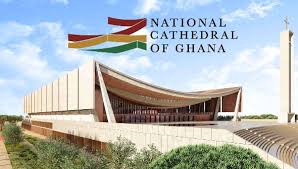
The National Cathedral project has long been one of Ghana’s most divisive public undertakings.
During the 2024 election period, members of the then-opposition National Democratic Congress (NDC) accused former Finance Minister Ken Ofori-Atta of unconstitutional conduct, claiming he had unlawfully released funds from the Consolidated Fund to finance the Cathedral without parliamentary sanction.
Appearing before Parliament in November 2022, Mr. Ofori-Atta denied the accusations, maintaining that the funding came from Contingency Vote allocations already approved under previous Appropriation Acts.
However, Mr. Amable argues that under Article 179(11), any expenditure from the Contingency Vote must be approved by a special supervisory committee, which did not occur in this instance. He asserts that this oversight renders the spending unlawful and unconstitutional.
In his suit, Mr. Amable insists that:
Article 179(2) mandates the government to submit detailed expenditure estimates to Parliament for approval under specific programmes or activities;
Article 179(11) serves as a narrow exception to that rule, allowing contingency expenditures only with the express consent of the President, Speaker, and Council of State Chairperson.
By claiming the project was funded through the Contingency Vote, Mr. Amable argues, Mr. Ofori-Atta effectively admitted to breaching these constitutional safeguards.
He is seeking a declaration that the spending was unlawful, and an order that all individuals or entities who benefited from the unapproved funds repay them to the State.
Attorney-General’s Defence
The Attorney-General (AG), in a July 2025 filing, rejected the claims, asserting that all financing for the Cathedral was lawfully approved by Parliament through the national budgets presented between 2018 and 2021.
The AG urged the Court to dismiss the suit, describing the plaintiff’s interpretation of the Constitution as “misconceived” and inconsistent with long-standing parliamentary budgetary practices.
This position contrasts sharply with the stance of the then-Minority Caucus, which in 2022 accused Mr. Ofori-Atta of illegally funding the project.
Beyond the Cathedral dispute, Mr. Amable is also challenging Ghana’s statutory borrowing framework, arguing that certain provisions of financial laws undermine Parliament’s authority over government borrowing under Article 181 of the Constitution.
He is asking the Court to declare sections of the Bank of Ghana Act (Act 612), the Public Financial Management Act (Act 921), and the Public Financial Management Regulations (L.I. 2378) unconstitutional for failing to require parliamentary approval of critical borrowing terms such as interest rates and investor rights.
His reliefs include:
A declaration that Section 30 of the Bank of Ghana Act and Section 61 of the PFM Act contravene Article 181(4);
A declaration that Regulations 105, 108, and 109(2) of L.I. 2378 are unconstitutional;
And an order striking down the impugned provisions.
He has also described the US$10 billion COVID-19 Relief Bond transaction between the Finance Ministry and the Bank of Ghana as unconstitutional.
The Supreme Court is expected to fix a date for full hearing after the parties exchange memoranda of issues.