Supreme Court upholds death sentences of wife, her brother and another for husband’s murder
By DL News
Published
Updated
2 min read
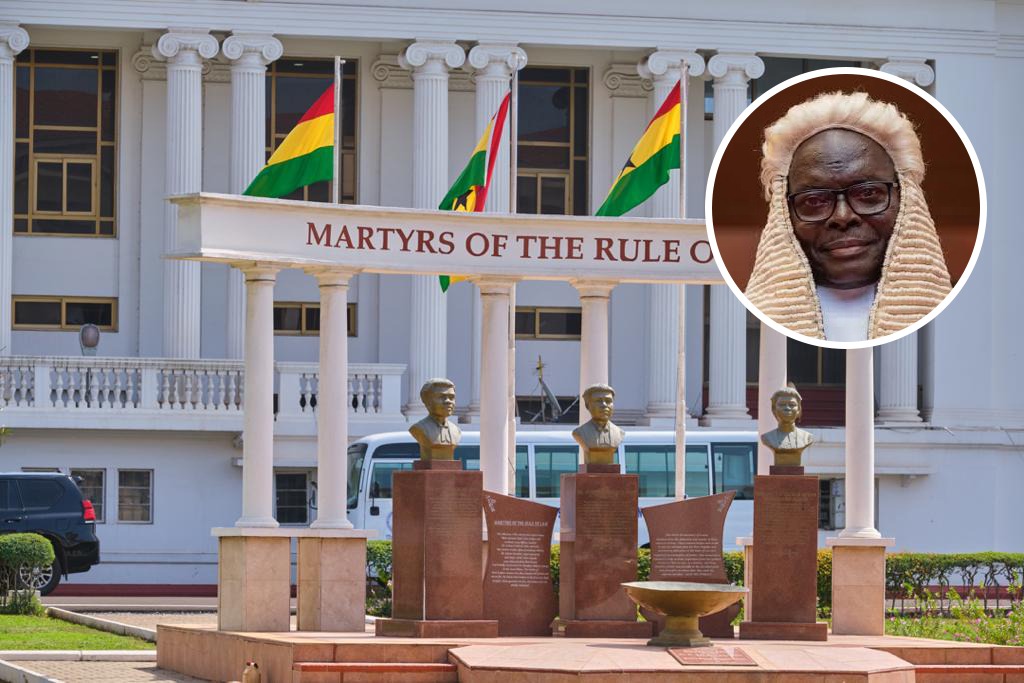
A five-member panel of the court, in the opinion of H.Kwofie (JSC) and comprising S.K.A. Asiedu, E.Y.Gaewu, Y.Darko Asare, and J.Bartels-Kodwo JJSC, rejected an appeal by three people convicted over the killing, including Karim’s wife. It f...
The Supreme Court has upheld the convictions and death sentences arising from the 2013 killing of Abdul Karim at his home in ACP Estates, Pokuase.
A five-member panel of the court, in the opinion of H.Kwofie (JSC) and comprising S.K.A. Asiedu, E.Y.Gaewu, Y.Darko Asare, and J.Bartels-Kodwo JJSC, rejected an appeal by three people convicted over the killing, including Karim’s wife. It found no reason to overturn the lower courts’ conclusions that two of the appellants carried out a planned attack and that his wife helped arrange it.
Karim’s wife initially told police that unknown robbers had entered the house and killed him while she was bathing. Investigators later pursued a different account after a witness, Kofi Nyagbedzi, gave them information implicating the other two appellants.
According to the prosecution, Karim’s wife recruited the men, let them into the house and hid them in a bathroom. She then identified her husband, supplied weapons and promised them payment. The two men gave statements admitting involvement and implicating her, but all three denied the allegations at trial. They said the statements had been obtained through force, threats or inducement.
The appeal centred in part on whether those statements should have been admitted as evidence. The Supreme Court held that the trial judge had properly examined their voluntariness in a separate hearing, known as a mini trial. It said minor inconsistencies in an independent witness’s account did not undermine the essential safeguards required by section 120 of the Evidence Act.
The appellants also argued that the judge’s directions to the jury were unfair or unclear. The Supreme Court disagreed, finding that the judge had adequately explained the law, reviewed both sides’ cases and left the factual questions to the jury.
Considering the confessions alongside witness testimony, medical evidence and the surrounding circumstances, the court held that the prosecution had proved its case beyond reasonable doubt. It found no clear error or miscarriage of justice that would justify disturbing the findings of the High Court and Court of Appeal.
The convictions and sentences were accordingly affirmed.
Log on to Dennislaw to read full judgment.