Avoiding ICC intervention; AG Dame urges African states to strengthen legal systems
By DL News
Published
Updated
2 min read
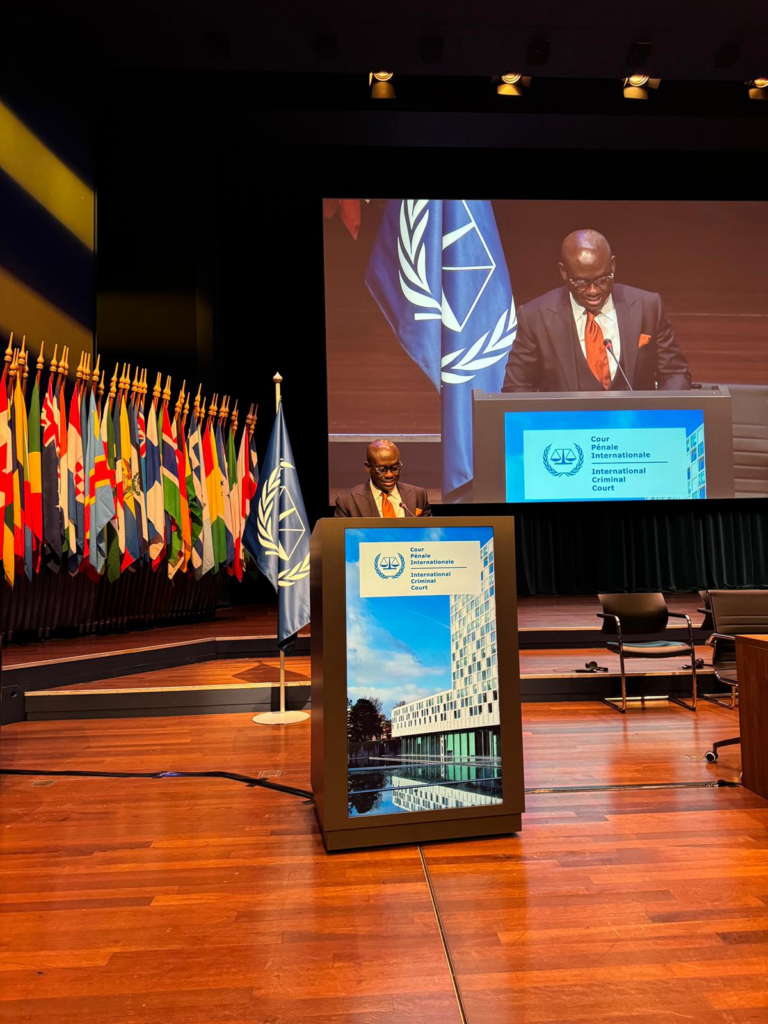
Speaking at the 23rd Assembly of States Parties to the Rome Statute of the International Criminal Court (ICC) in The Hague, Mr. Dame emphasized reducing reliance on external justice mechanisms by building robust national legal frameworks.
Ghana’s Attorney General, Godfred Yeboah Dame, has urged African nations to strengthen their domestic legal systems as a way to assert their sovereignty and effectively address international crimes.
Speaking at the 23rd Assembly of States Parties to the Rome Statute of the International Criminal Court (ICC) in The Hague, Mr. Dame emphasized reducing reliance on external justice mechanisms by building robust national legal frameworks.
"Strong and efficient legal systems are vital for the investigation and prosecution of international crimes, ensuring the primacy of national jurisdiction," he noted. "The ICC alone cannot handle all international crimes committed within the territories of states."
He encouraged African nations to adopt the Rome Statute into their domestic laws or introduce specific legislation that criminalizes acts such as war crimes, genocide, and crimes against humanity, with penalties consistent with international standards.
“This is a tangible expression of sovereignty,” he said. “It is also a means to prevent the impunity that often necessitates the intervention of the ICC.”
Mr. Dame linked the establishment of effective legal systems to the foundational principles of democracy. He argued that when democracy thrives—with freedom of expression, security, and constitutional governance—issues like genocide, war crimes, and impunity become less likely.
He highlighted the synergy between the ICC’s complementarity principle, which prioritizes domestic justice systems, and national efforts to promote democracy and accountability.
While praising the ICC’s work in advancing international justice, Mr. Dame called for greater collaboration with local authorities and initiatives to bolster national judicial capacities. Using ICC activities in the Central African Republic as an example, he advocated for stronger partnerships to enhance the Court’s impact.
Ghana, he reaffirmed, remains fully committed to the ICC’s mission. “We will continue to collaborate closely with the ICC to achieve justice and accountability,” he said.
However, the Attorney General also underscored the importance of geographical neutrality in the ICC’s approach to international crimes, urging the Court to remain impartial in its investigations.
“The ICC must be perceived as addressing crimes worldwide, without bias,” he stated. He welcomed recent efforts by the ICC, such as preliminary investigations outside Africa and the establishment of field offices, to address the perception of regional bias.
Additionally, Mr. Dame commended ongoing initiatives to improve the ICC’s efficiency, including the work of the Group of Independent Experts and the Independent Oversight Mechanism. He stressed the importance of fairness in recruitment processes to ensure geographic and gender diversity, arguing that such inclusivity enhances the Court’s impartiality and effectiveness.
In conclusion, Mr. Dame reaffirmed Ghana’s dedication to international justice.