BoG's revocation of UniCredit license was proper-Supreme Court
By DL News
Published
Updated
3 min read
This judgment by the apex court thus affirms an earlier one by the High Court which cleared the Central Bank of any wrongdoing in the action.
The Supreme Court has unanimously upheld the Bank of Ghana’s revocation of the operating license of Unicredit thereby reversing the decision of the Court of Appeal on the matter.
This judgment by the apex court thus affirms an earlier one by the High Court which cleared the Central Bank of any wrongdoing in the action.
This was the decision of a five-member panel presided over by the Chief Justice, Gertrude Torkornoo which consisted of Justice Mariama Owusu, Justice Prof. Henrietta Joy Abena Nyarko Mensa-Bonsu, Justice Ernest Yao Gaewu, and Justice Yaw Darko Asare.
The Central Bank’s revocation of UniCredit’s license was contained in an August 16, 2019 Statement which noted that the action had become necessary because the Financial Institutions including UniCredit, had become insolvent even after a reasonable period within which it had engaged with them in the hope that they would be recapitalized by their shareholders to return them to solvency.
Dissatisfied with the decision, the mother company of UniCredit Savings; HODA Holdings Limited, filed an action at the High Court (Human Rights Division) against the Governor and the Central Bank.
It argued inter alia that over GHS 54 million of its funds which it had been trying to retrieve, were locked up with Unibank before it was forced to cease operations by the Bank of Ghana in 2018. However, the action was dismissed by the court.
Subsequently, they went to the Court of Appeal to challenge the decision of the High Court.
The three-member panel of the appellate court on Thursday, July 7, 2022, in a unanimous decision, reversed the said revocation by the Central Bank.
Also dissatisfied with this decision, the Bank of Ghana filed an appeal at the Supreme Court which has led to this decision.
The apex court has meanwhile reserved its full decision to July 12, 2024.
Check out the reasons given by the Bank of Ghana in the August 2019 Statement for the revocation of the operating license of UniCredit;
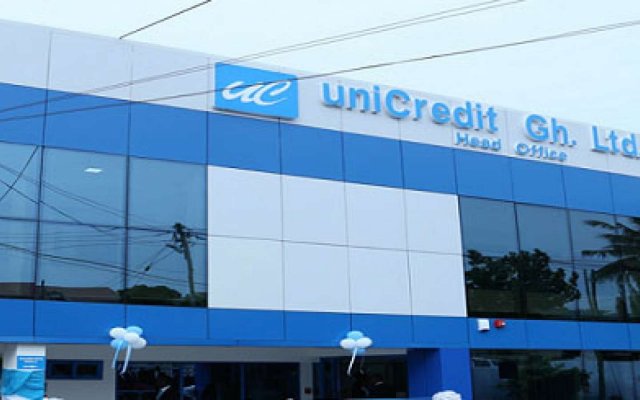
UNICREDIT GHANA LIMITED
UniCredit Ghana Limited (UniCredit), formerly Kantamanto Savings and Loans Company Limited, was given an operating license in October 1995 and commenced operations on 1st November 1995. In 2006, the Institution was acquired by the Hoda Group of Companies and subsequently, its name was changed from Kantamanto Savings and Loans Limited to UniCredit Ghana Limited in March 2007.
The Institution is currently over-exposed to a related party, uniSecurities Limited, a sister company. The institution’s inability to access its funds from uniSecurities, even though overdue, has resulted in severe liquidity challenges and its failure to meet withdrawal requests of customers.
UniCredit Savings & Loans Ltd. was found to be insolvent with a negative capital adequacy ratio and negative net worth following the Bank of Ghana’s assessment as of December 2018. The Bank of Ghana directed the Board and Management of the institution to immediately inject additional capital to address the capital deficiency but this has not been successful.
The specific issues that led to the revocation of the license of the institution included the following:
a. The institution’s adjusted Net worth of negative GH¢221.32 million as of the end of May 2019 indicates that its paid-up capital is impaired in violation of Section 28(1) Act 930.
b. The institution’s adjusted capital adequacy ratio of negative 97.83% as of end-May
2019 is in violation of Section 29(2) of Act 930. This is mainly due to the non-performing related party exposures of GH¢160.10 million to uniSecurities which exceeds its negative networth.
c. The Institution has been breaching the statutory cash reserve ratio requirement since April 2018.
d. The institution is unable to meet the deposit withdrawals of customers due to its severe liquidity challenges. The Bank of Ghana has received many complaints from the institution’s customers about their inability to access their funds.
e. The institution has a high percentage of non-performing loans.