Catholic Bishops demand special courts to tackle galamsey menace
By DL news
Published
2 min read
In a statement issued on Monday, September 15, 2025, and signed by the Conference’s President, Most Rev. Matthew Kwasi Gyamfi, the Bishops described illegal mining as “one of the gravest afflictions of our time,” pointing to the devastation...
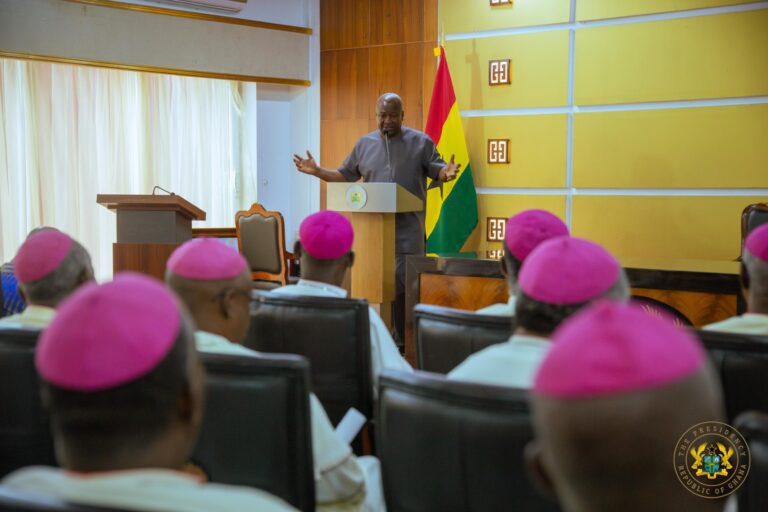
The Ghana Catholic Bishops’ Conference (GCBC) is pressing President John Dramani Mahama to create dedicated courts to fast-track the prosecution of illegal miners and their sponsors, warning that the nation is facing a galamsey crisis of unprecedented proportions.
In a statement issued on Monday, September 15, 2025, and signed by the Conference’s President, Most Rev. Matthew Kwasi Gyamfi, the Bishops described illegal mining as “one of the gravest afflictions of our time,” pointing to the devastation it has wreaked on rivers, forests, farmland, and public health.
The GCBC maintained that the establishment of specialised courts was essential to ensure quicker trials and curb the culture of impunity surrounding illegal mining. They further argued that accountability should extend beyond the operators themselves to politicians, chiefs, security personnel, and others who protect such activities.
“This betrayal of trust cuts to the very marrow of our national identity. We call such leaders to repentance without delay,” the statement declared.
Beyond judicial reforms, the Bishops proposed a corruption-proof, permanent task force combining the expertise of environmental scientists, local authorities, and security agencies.
Additional steps, they noted, could include curfews in sensitive mining zones, tougher sanctions under mining laws, reforestation drives, and new livelihood programmes for people who resort to galamsey out of poverty.
The Conference stressed that the fight against galamsey is also a health and security issue. They pointed out that toxins from mining sites are contaminating food chains and contributing to cancers and neurological illnesses, while armed groups and criminal networks benefit from the trade, fueling violence in affected communities.
The Bishops appealed to citizens to resist the allure of illicit wealth and urged all sectors of leadership chiefs, politicians, clergy, and security forces to uphold their responsibilities.
“This struggle is not merely about law enforcement. It concerns the very soul of Ghana. It is about whether we choose life or death, blessing or curse,” they said.
Closing their statement, the GCBC called on the government to act boldly and decisively.
“With God’s grace, let us choose life, for ourselves, for our children, and for generations yet unborn,” the Bishops urged.