Ex-AG Ayikoi Otoo calls for curbs on Attorney-General’s power over corruption cases
By DL News
Published
2 min read
Speaking on Asaase Radio’s current affairs programme The Forum, he argued that the dual role of the Attorney-General as both government legal adviser and cabinet minister creates inherent conflicts, particularly where cases involve serving...
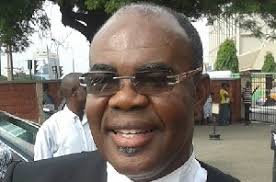
Former Attorney-General Nii Ayikoi Otoo has called for sweeping constitutional reforms to strip the Attorney-General of control over politically sensitive corruption prosecutions and hand full prosecutorial authority to independent anti-corruption bodies.
Commenting on the Constitutional Review Committee’s report, which was recently submitted to President John Dramani Mahama, Otoo said Article 88 of the 1992 Constitution has made it difficult to shield criminal prosecutions from partisan influence.
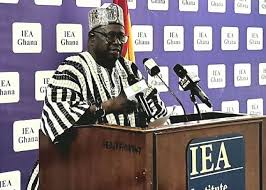
Speaking on Asaase Radio’s current affairs programme The Forum, he argued that the dual role of the Attorney-General as both government legal adviser and cabinet minister creates inherent conflicts, particularly where cases involve serving officials.
According to him, that institutional tension is what gave rise to the Office of the Special Prosecutor (OSP) in the first place.
Otoo said that despite the establishment of the OSP, the Constitution still requires the Attorney-General to nominate or authorise prosecutors, leaving key institutions entangled in what he described as a “murky” framework.
He pointed to the interaction between the OSP and the Economic and Organised Crime Office (EOCO) as an example of how constitutional design has produced overlapping mandates and uncertainty, including in cases involving a former sanitation minister.
The former Attorney-General was particularly critical of the Attorney-General’s constitutional authority to enter nolle prosequi and terminate criminal proceedings, warning that the power has repeatedly been used after changes of government to discontinue trials involving politically connected individuals.
He argued that instances where prosecutions against former ministers and party loyalists were dropped following transitions of power have weakened public trust in the justice system and fed perceptions of impunity.
For Otoo, the answer lies in hardwiring prosecutorial independence into the Constitution itself, rather than relying on ordinary legislation that ultimately remains subordinate to Article 88.
He urged that the prosecutorial powers of bodies such as the OSP be entrenched directly in the Constitution, so they cannot be overridden by a future Attorney-General or easily reversed by a simple parliamentary majority.
The Constitutional Review Committee was set up to examine the 1992 Constitution and recommend reforms amid long-standing calls to rebalance executive power, tighten accountability mechanisms and rebuild public confidence in state institutions.