Inside the Ghana School of Law: What Every Aspiring Student Should Know
By Richard Osei Boateng
Published
Updated
2 min read
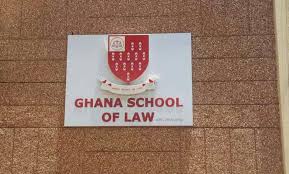
The school operates from its main campus at Makola and has three additional campuses: GIMPA, UPSA, and Kumasi (at the Kwame Nkrumah University of Science and Technology—KNUST).
The Ghana School of Law is currently the only institution in Ghana mandated by the General Legal Council to run the two-year professional law course.
Successful completion of this program leads to the award of the Barrister-at-Law Certificate, qualifying one to practice law in Ghana.
The school operates from its main campus at Makola and has three additional campuses: GIMPA, UPSA, and Kumasi (at the Kwame Nkrumah University of Science and Technology—KNUST).
Structure of the Programme
The professional course is structured into two parts:
Part 1: First year
Part 2: Second (final) year
Additionally, the school offers a one-year post-call program for lawyers who have already studied and been called to the bar in other Commonwealth countries but wish to be called in Ghana.
Currently, the Makola, GIMPA, and Kumasi campuses accommodate both Part 1 and Part 2 students. However, the UPSA campus hosts only Part 1 students.
Lecture Times and Grouping
Lectures are structured into two main groups:
Group A: Monday and Tuesday
Group B: Wednesday and Thursday
Classes run from 7:00 a.m. to 8:00 p.m., but each student attends lectures only two days a week, depending on their assigned group.
Mandatory Internship
A mandatory internship program forms part of the qualification requirements. Students are expected to intern at both a court and a law firm for a specific duration, covering both school sessions and vacation periods.
Students typically attend internships on the two days they are free from lectures. The internship program also continues briefly during vacation.
Examinations and Progression
Examinations are conducted once a year in June for each level. Students admitted in November have until the following June to write their first examination.
These exams are externally administered by the Independent Examinations Committee (IEC), not by lecturers, ensuring neutrality in the setting and marking of scripts.
To progress:
Part 1: Students must pass at least four out of six papers, scoring a minimum of 50% per paper.
Part 2: All four papers must be passed to be called to the Bar.
Students who fail up to two papers in Part 1 may resit while proceeding to Part 2. However, those who fail three or more papers must repeat the entire course, starting afresh with the next cohort.
Students have a five-year maximum period within which to complete the course. Failure to complete within this period results in loss of studentship.
Courses Offered
Part 1 students study the following six courses:
Civil Procedure
Criminal Procedure
Law of Evidence
Company and Commercial Practice
Legal Accountancy and Law Practice Management
Alternative Dispute Resolution
Part 2 students study the following four courses:
Interpretation of Statutes and Deeds
Conveyancing and Drafting
Advocacy and Ethics
Family Law and Practice
Entry Requirements
To gain admission to the regular two-year course, an applicant must:
Hold an LLB from an accredited institution
Pass a competitive entrance examination held every September
Prospective candidates must purchase an online voucher for registration once invitations are announced. As of now, the 2025 pre-examination processes have yet to begin.
We wish all aspiring candidates the very best as they prepare for this rigorous but rewarding journey.