Minority rejects Torkornoo's removal, warns of threat to judicial independence
By DL News
Published
1 min read
President John Dramani Mahama formally dismissed the Chief Justice on 1 September 2025, acting on the recommendation of a Committee of Inquiry established under Article 146(6) of the Constitution.
The Minority in Parliament has declared its outright opposition to the removal of Chief Justice Gertrude Araba Esaaba Sackey Torkonoo, accusing the government of employing an opaque and politically dangerous process.
President John Dramani Mahama formally dismissed the Chief Justice on 1 September 2025, acting on the recommendation of a Committee of Inquiry established under Article 146(6) of the Constitution.
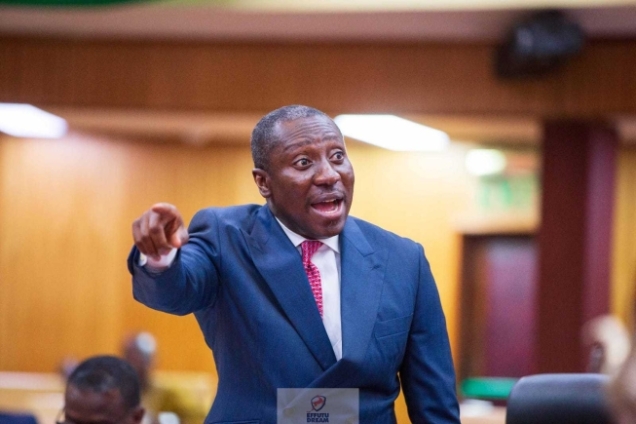
Addressing Parliament on Tuesday, 21 October, Minority Leader Alexander Afenyo-Markin said the dismissal lacked transparency and undermined constitutional safeguards.
“The Minority registers its unequivocal objection to the removal of the Chief Justice,” he said. “We believe the process violated constitutional principles and sets a dangerous precedent for judicial interference.”
Afenyo-Markin raised questions about the procedures of the Pwamang Committee, which conducted the inquiry.
He said three separate petitions were referred to the committee, but only one was reportedly heard before proceedings were abruptly adjourned to 15 September.
“Yet, without notice to any party, the committee suddenly submitted its report on 1 September, and within two hours her removal was announced,” he stated.
He further alleged that the suspension process was constitutionally questionable.
“The warrant claimed a prima facie case had been established, but no one has seen such a document to date,” he added.
The Minority also criticised what it described as secrecy surrounding the committee’s findings.
He warned that the precedent could target other independent constitutional bodies, including the Electoral Commission, the Auditor-General and the National Commission for Civic Education.
The Minority Leader also linked the issue to Ghana’s democratic stability.
“If judicial independence can be manipulated in this manner, we should not expect free or credible elections in future,” he said.
Afenyo-Markin insisted that the judiciary is “the last line of defence” for democracy and pledged that the Minority would resist any attempt to compromise its independence.