Oppong Nkrumah files bill, seeks amendment to Ghana's Public Financial Management Act
By DL News
Published
2 min read
Filed on Tuesday at the Office of the Clerk to Parliament, the proposed amendments to the Public Financial Management Act (PFMA) seek to ensure that no Ministry, Department, or Agency (MDA) receives public funding unless its projects and po...
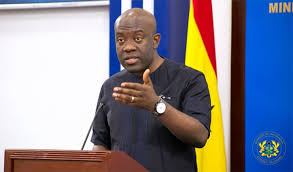
Member of Parliament for Ofoase-Ayirebi and former Information Minister, Kojo Oppong Nkrumah has introduced a private member’s bill aimed at tightening how public funds are managed and spent in Ghana.
Filed on Tuesday at the Office of the Clerk to Parliament, the proposed amendments to the Public Financial Management Act (PFMA) seek to ensure that no Ministry, Department, or Agency (MDA) receives public funding unless its projects and policies are approved by the National Development Planning Commission (NDPC).
Oppong Nkrumah said the bill responds to a growing problem where MDAs pursue projects that do not align with the country’s national development strategy. “Too many public institutions are bypassing the NDPC process and still spending money. This is a gap in the law, and I want to close it,” he stated.
If passed, the bill would make three key changes:
The Finance Minister would be prohibited from releasing funds to any MDA whose plans have not been certified by the NDPC.
Internally Generated Funds (IGF) could no longer be used for projects outside the national plan.
Officials who approve or facilitate such unauthorized expenditures would face criminal sanctions.
Oppong Nkrumah also emphasized that IGFs, though raised by individual institutions, are still public resources because their collection is governed by law. “You can’t call it ‘your money’ when it’s collected under the authority of the Fees and Charges Act,” he explained.
To enforce accountability, the bill introduces penalties tied to Section 98 of the current PFMA for anyone who facilitates spending on uncertified programs.
While some fear the proposal could increase bureaucracy, Oppong Nkrumah argued that formal structures are necessary to ensure disciplined spending and national coherence. He hinted that this could be the first step in broader reforms, including possible amendments to the National Development Planning (System) Act, Act 480.
The MP expressed hope that Parliament would support the bill across party lines, describing it as a practical move to protect the public purse. “This is about ensuring we all move in the same direction. If the government is serious about financial discipline, this bill should be welcome,” he said.
Parliament is expected to consider the bill formally in the coming weeks. If approved, it would mark one of the most significant changes to Ghana’s public financial laws in years, aiming to align national spending with long-term development goals.