Otumfuo presents Bawku meidation report; Says it must bind all sides
By DL News
Published
1 min read
Handing over the final report to President John Mahama at the Jubilee House on Tuesday, 16 December, the Asantehene stressed that his mandate was to facilitate mediation, not to sit in judgment over the parties.
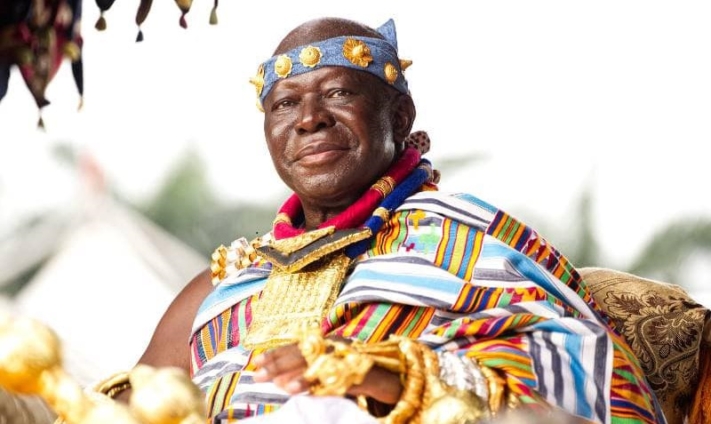
The Asantehene, Otumfuo Osei Tutu II, says the findings and recommendations of the Bawku Peace Mediation report should be treated as binding by all parties to the conflict, framing the process as a traditional fact-finding mission focused on restoring calm rather than apportioning blame.
Handing over the final report to President John Mahama at the Jubilee House on Tuesday, 16 December, the Asantehene stressed that his mandate was to facilitate mediation, not to sit in judgment over the parties.
He told the President that the document was being submitted for government’s consideration and implementation in the national interest, noting that peace and security in Bawku must take precedence over partisan or factional claims.
Otumfuo underlined that the work of the committee was grounded in presenting the facts as they emerged during the process and that those outcomes should guide all stakeholders going forward. The conclusions, he said, ought to be respected collectively if a durable settlement is to be achieved.
The Asantehene also reflected on earlier attempts by various administrations to resolve the protracted dispute through legal and political channels. Court decisions, he observed, had repeatedly failed to end the crisis, as losing sides were often unwilling to accept unfavourable rulings.
He recalled that both former President Nana Addo Dankwa Akufo-Addo and President Mahama had reached the view that a different approach was required – one rooted in traditional mediation rather than adversarial litigation – and had jointly endorsed his role in leading that effort.
According to Otumfuo, the two leaders, representing Ghana’s main political traditions, agreed that any solution emerging from the mediation should stand above partisan change and be implemented by successive governments as a “traditional” settlement to the Bawku question.
The report, the product of months of consultations and shuttle engagements, is now expected to inform the next phase of government action aimed at consolidating sustainable peace in Bawku and its surrounding communities.