Re-examining approach to legal education: AG outlines steps
By DL News
Published
2 min read
Recounting a 2015 speech on the subject, he emphasized that the country stands at a crossroads, as the rapid expansion of legal education has created both opportunities and challenges
The Attorney General of the Republic of Ghana, Dr. Dominic Ayine, has reiterated the need for the nation to re-examine its approach to legal education.
Recounting a 2015 speech on the subject, he emphasized that the country stands at a crossroads, as the rapid expansion of legal education has created both opportunities and challenges.
Speaking at the 2025 Bar Conference in Wa, the Attorney General noted that while the increasing number of young lawyers is commendable, the nation must also confront issues such as uneven quality of training, inadequate mentorship, and limited opportunities for practice.
Legal Education Bill
Dr. Ayine announced that he would be submitting the Legal Education Reform Bill to Cabinet this month. The main objective of the Bill, he explained, is to widen access to legal education and ensure equality of opportunity for all Ghanaians who aspire to become lawyers.
According to him, the Bill seeks to achieve this by introducing a one-year law practice course to be administered by accredited law faculties.
Under the proposal, students who obtain a Bachelor of Laws (LLB) degree from an accredited university will subsequently enrol in the law practice course at the same institution for one academic year.
Focus of the Law Practice Course
The law practice course, he said, will focus exclusively on subjects that are practical in nature—civil procedure, criminal procedure, advocacy, professional ethics, and the law of evidence.
These will form the examinable subjects for the National Bar Examination, to be administered by the Council for Legal Education.
When enacted, the Bill will effectively reduce the duration of legal education from five years to four.
Status of the Ghana School of Law in the Reform
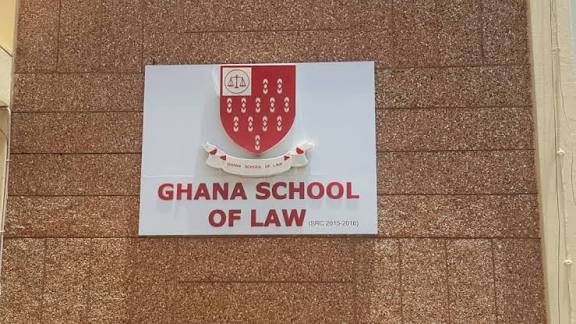
The Attorney General further explained that although the current monopoly of the Ghana School of Law will be abolished, the transitional arrangements in the Bill will retain the institution as a stop-gap mechanism. This will apply to current students and to persons who have qualified to practise law in common law jurisdictions but wish to enrol as members of the Ghana Bar.
2027 Deadline
Dr. Ayine added that once the current cohort of students completes its training in 2027, the Ghana School of Law will adopt and teach the syllabus of the law practice course to prepare students for the National Bar Examination.