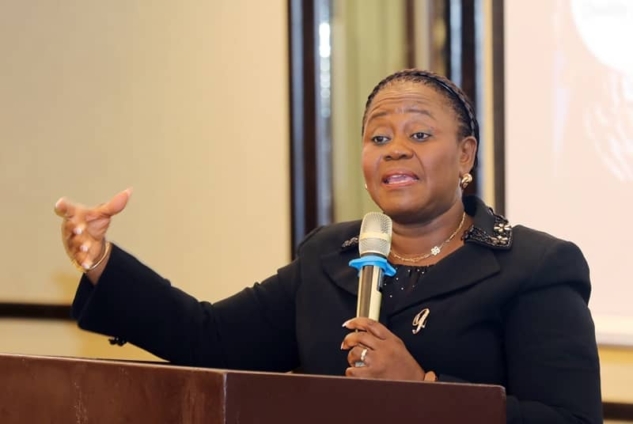
Suspended Chief Justice drags Ghana to ECOWAS court over rights violations
By DL News
Published
1 min read
The revelation was made by Deputy Attorney General Dr. Justice Srem Sai in a post on X (formerly Twitter), where he stated that the case was officially lodged on July 4, 2025.
Ghana’s suspended Chief Justice, Gertrude Torkornoo, has taken her legal battle beyond national borders—filing a human rights case against the Republic of Ghana at the ECOWAS Community Court of Justice in Abuja, Nigeria.
The revelation was made by Deputy Attorney General Dr. Justice Srem Sai in a post on X (formerly Twitter), where he stated that the case was officially lodged on July 4, 2025.
According to Dr Srem Sai, the Chief Justice argues that her suspension amounts to an effective removal from office, even though no final judicial ruling has been made on the matter. She claims this violates her fundamental right to serve in the constitutional role she was appointed to.
Justice Torkornoo’s complaint at the ECOWAS Court reportedly echoes arguments already filed in Ghana’s Supreme Court and High Court, where she is contesting the legality and fairness of the ongoing process seeking her removal from office.
Her suspension was announced by President John Dramani Mahama in consultation with the Council of State, following the submission of three petitions alleging “stated misbehaviour.” A five-member committee of inquiry—led by Supreme Court Justice Gabriel Pwamang—was subsequently constituted to investigate the claims.
Other committee members include Justice Samuel Kwame Adibu‑Asiedu, former Auditor-General Daniel Yao Domelevo, Major Flora Bazaanura Dalugo of the Ghana Armed Forces, and Professor James Sefah Dzisah, an academic.
The Chief Justice, who has firmly denied all allegations, insists the petitions lack merit under Article 146 of the 1992 Constitution. She also filed for an interlocutory injunction at the Supreme Court on May 21 to suspend the committee's proceedings and disqualify certain members over concerns of bias.
The ECOWAS Court case now adds a significant regional dimension to what is shaping up to be one of the most consequential legal and constitutional challenges in Ghana’s recent history.