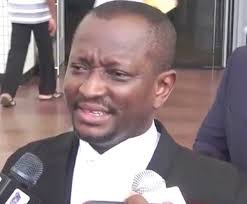
Tuah-Yeboah challenges Ayine over ‘weak Saglemi case’ claim
By DL News
Published
1 min read
He said he found it “difficult to accept” that the case was being dismissed as poorly put together, arguing that the file at the Attorney-General’s Department was the product of extensive work by state security agencies and independent tech...
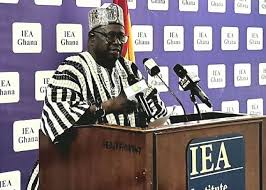
Former Deputy Attorney General Alfred Tuah-Yeboah has taken issue with Attorney General Dominic Ayine’s description of the Saglemi housing prosecution as a “poorly investigated” and weak case.
Speaking on Channel One TV on Sunday, 11 January, Mr Tuah-Yeboah said he was stunned by Mr Ayine’s comments on JoyNews’ Newsfile the previous day, insisting the Attorney General’s assessment either overlooked or misrepresented the evidence on the docket.
He said he found it “difficult to accept” that the case was being dismissed as poorly put together, arguing that the file at the Attorney-General’s Department was the product of extensive work by state security agencies and independent technical experts.
According to Mr Tuah-Yeboah, investigators commissioned the Ghana Institute of Surveyors in April 2020 to carry out an on-site valuation of the Saglemi project to determine the actual progress of work. The report, submitted on 21 February 2022, is said to have revealed a large gap between payments made and work done.
Out of the 5,000 housing units originally planned, he recalled, only 1,506 had been built on site. Of these, 666 were deemed substantially complete, 778 were only structurally complete, and 74 were at foundation stage.
Mr Tuah-Yeboah further claimed that the contractor had been paid more than US$196m, yet the surveyors valued the work on the ground at about US$67m, with an additional US$32m required just to finish the 1,506 units standing.
In his view, those figures provided a solid basis for a criminal trial anchored on alleged financial loss to the state, rather than the flimsy foundation suggested by the Attorney General.
He therefore questioned the decision to terminate the Saglemi prosecution, arguing that the underlying evidence pointed to serious financial and procurement breaches that ought to be tested in court rather than abandoned.