Who owns your dead body? Stakeholders push for legislation to give spouses a stake
By Richard Osei Boateng
Published
3 min read
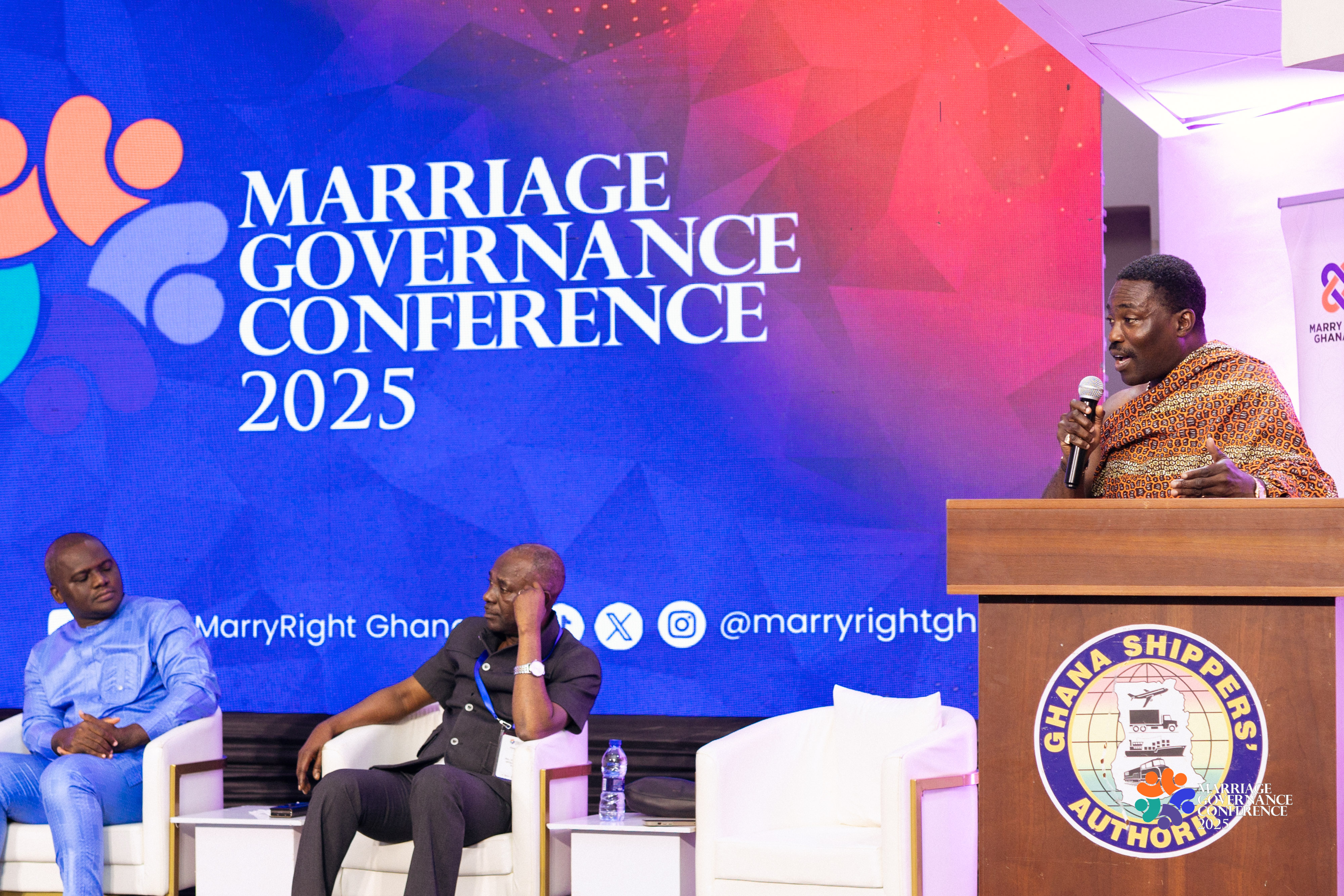
The conference, organized by MarryRight Ghana, closed with a clear message, with stakeholders calling for legislation to give the nuclear family, especially spouses, a legal stake in burial decisions.
When death comes, it takes away more than breath; it unsettles traditions, laws, and the fragile bonds of family. In Ghana today, one of the most heated questions confronting grieving households is, who truly owns the body of the dead?
It was, therefore, not out of place that the organizers of the Marriage Governance Conference found it prudent to table this all-important and dispute-ridden issue for discussion at their 2025 edition to inform decision-making.
To do justice to the matter, five sharp minds with expertise spanning law practice and religion were brought together for the discussion.
Under the moderation of GIMPA Law Dean, Dr. Agyeman Budu, the panel consisted of renowned legal practitioner Kwame Boafo Akuffo; Justice Nana Yaw Oppong, a traditional leader and Director of Legal Education; and family law practitioner and lecturer Madam Vivien Lamptey.
Also representing were respected Islamic scholar Sheikh Irbard Ibrahim and Reverend Minister-cum-lawyer Rev. Jonathan Afrique Ahali, who shared their insightful perspectives on the topic.
A Problem of the Modern Elite
Lawyer Kwame Boafo Akuffo views the dispute as one originating not from the villages, but from the cities and the diaspora. In rural communities where customs still reign, he argues, there is rarely any confusion about who controls a dead body.
“It is the intelligentsia, those who ape European culture, who now see our customs as crude,” he said. According to him, the clamor for spousal rights in burial is “bourgeois thinking,” a symptom of social fragmentation and our obsession with being modern.
For him, society will naturally resolve this tension in time. But where family lineages are mixed and entrenched views clash, the courts may need to intervene—unless, he suggests, people leave behind “living wills” to guide how they should be buried.
The Church and the Law
From the pulpit, Reverend Jonathan Afrique Ahali took a practical view: the church does not own the dead body.
“The Bible enjoins Christians to submit to governing authority,” he noted.
In law, therefore, the body belongs to the customary family. For the church, the soul is what matters; the body is only a vessel for a peaceful transition. The church cooperates, but it does not control.
The Widow’s Voice
For Vivien Lamptey, however, the real issue is fairness to the nuclear family. She observed that conflicts over burial usually erupt around prominent figures, not the poor. By law, she admits, the body belongs to the family—and even a written will containing funeral directions can be brushed aside by relatives if it does not align with their wishes.
Yet Madam Lamptey insists widows must be heard.
“We are quick to say that a woman becomes part of her husband’s family at marriage. But when he dies, she is treated as an outsider.”
She called for reforms to give widows a recognized role in burial decisions: “If the body belongs to the family, then the widow, as part of that family or the extended family by custom and marriage, must also be respected.”
Custom and Confusion
Justice Nana Yaw Barima Kodie Oppong drew a sharp line between inheritance and succession. Property belongs to heirs, but the dead body, he emphasizes, is tied to succession and family roles.
Marriage, he explains, does not automatically make one part of a spouse’s lineage. Thus, the decision about burial rests, traditionally, with the deceased’s family.
The Islamic Perspective
In Islam, Sheikh Irbard Ibrahim explained, there is little room for dispute. Death is simple: the focus is on the soul, not the body. Burial is quick, modest, and without commercialization.
Complications arise only in interfaith marriages, but even then, the Muslim community assumes the duty of burial.
Importantly, Islam also protects widows, granting them four months and ten days of care and recognition after their husband’s death. “Once you die, you belong to the Muslim community,” he says. “The whole earth is sacred, so it doesn’t matter where you are buried.”
Towards Legislation
Despite these diverse views, one thing is clear: disputes over dead bodies are multiplying, especially in urban and elite circles. Morgues have become battlegrounds, and families have dragged their grief into courtrooms.
As such, the conference, organized by MarryRight Ghana, closed with a clear message, with stakeholders calling for legislation to give the nuclear family, especially spouses, a legal stake in burial decisions.