Why AG entered nolle prosequi in the Duffuor case
By DL News
Published
2 min read
“In this case, that benchmark has been met,” the statement read. “The continuation of the trial, in the Attorney-General’s view, would no longer serve any additional public interest.”
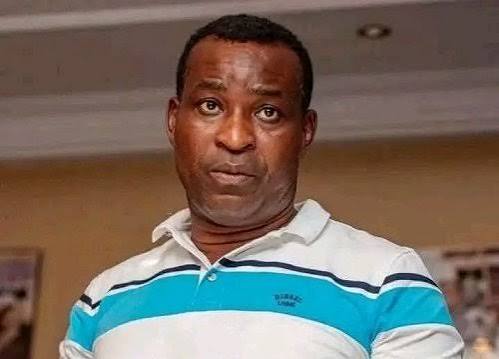
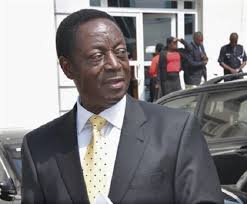
The Attorney-General has filed a nolle prosequi, effectively halting the prosecution of Dr. Kwabena Duffuor and seven others in connection with the collapse of uniBank.
The announcement, made by Deputy Attorney-General Dr. Justice Srem-Sai, brings an end for now to the criminal proceedings that began over four years ago.
According to the AG’s office, the decision follows a “significant recovery” of funds previously lost to the state, which formed the cornerstone of the original charges.
The case, The Republic v. Kwabena Duffuor & 7 Others, stemmed from the government’s sweeping financial sector clean-up launched in 2018.
It aimed to restore order and integrity in the banking system, which insolvencies and regulatory breaches had rocked.
Dr. Duffuor, a former governor of the Bank of Ghana and finance minister, was accused of receiving over GHS 663 million in funds allegedly obtained through criminal means. The Bank of Ghana, in declaring uniBank insolvent in 2018, claimed that insiders had withdrawn over GHS 5.3 billion in loans and assets without due process.
Other accused persons included high-ranking individuals such as former BoG Deputy Governor Johnson Asiama, whose role in approving questionable transactions also came under scrutiny.
But in a carefully worded statement, the AG’s office explained that under a policy developed with the Economic and Organized Crime Office (EOCO) and other institutions, prosecution in some cases could be reconsidered if at least 60% of lost funds were recovered.
The Attorney-General stressed that this move is not a declaration of innocence. Rather, it reflects a strategic decision to prioritize the recovery of public resources over lengthy court proceedings, especially where significant gains have already been made.
Between 2017 and 2019, Ghana’s banking sector went through a painful transformation. Several local banks—including uniBank, UT Bank, and Capital Bank—were declared insolvent. The BoG cited poor governance, reckless lending, and unsound business practices as key triggers.
The fallout led to the formation of the Consolidated Bank Ghana (CBG), which absorbed the assets of failed banks. Meanwhile, government spending on the rescue effort ran into billions of Ghana cedis, prompting urgent efforts to retrieve as much of the lost money as possible.
EOCO and the AG’s Department took the lead in mounting criminal prosecutions against those suspected of wrongdoing. The Duffuor case became a high-profile test of Ghana’s commitment to transparency and justice.