
Results for "Chief Justice Mentoring Programme"
133 results.
Opinion
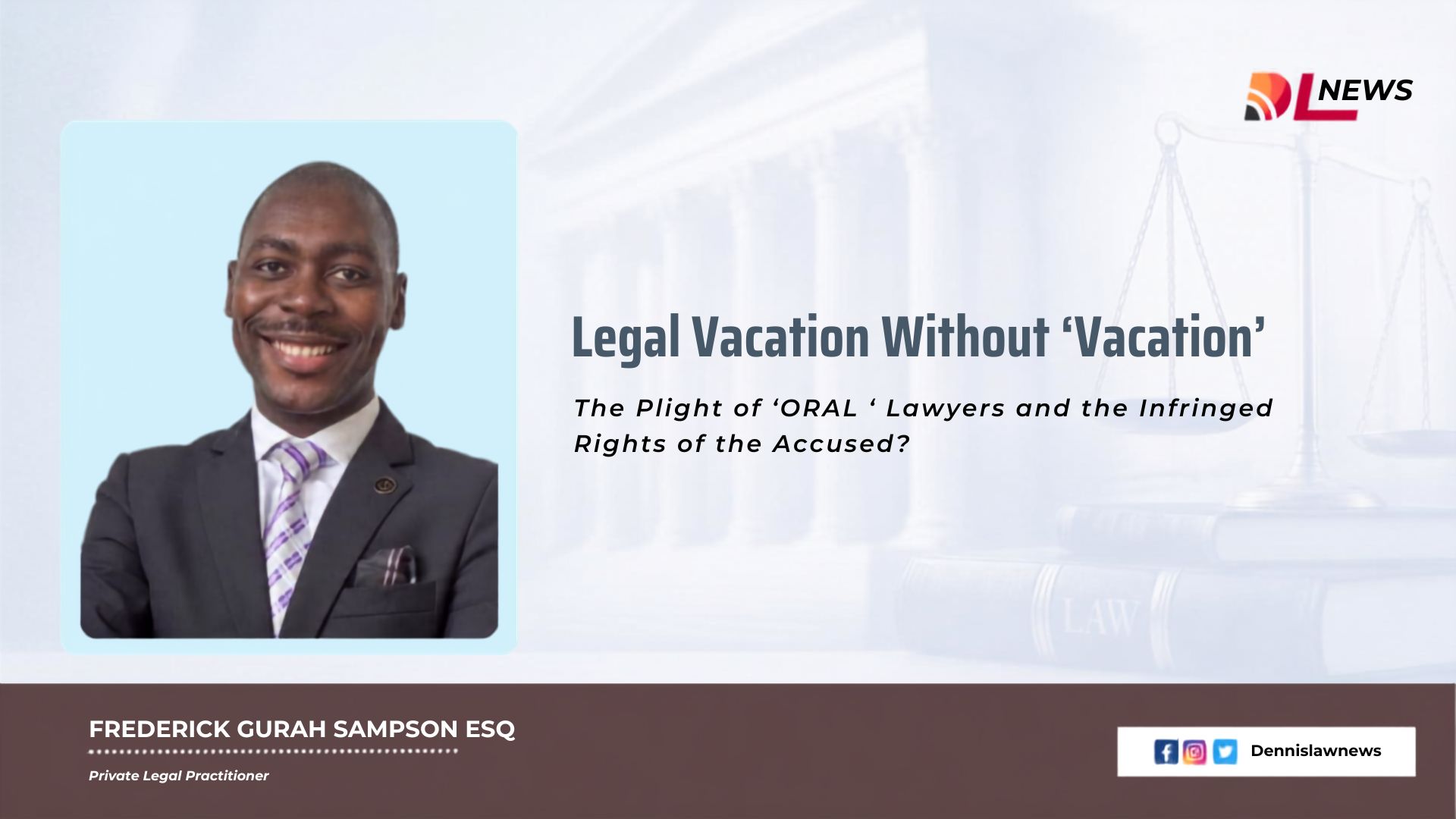
Legal Vacation Without ‘Vacation.’; The Plight of ‘ORAL ’ Lawyers and the Infringed Rights of the Accused?
Frederick Gurah Sampson
Opinion
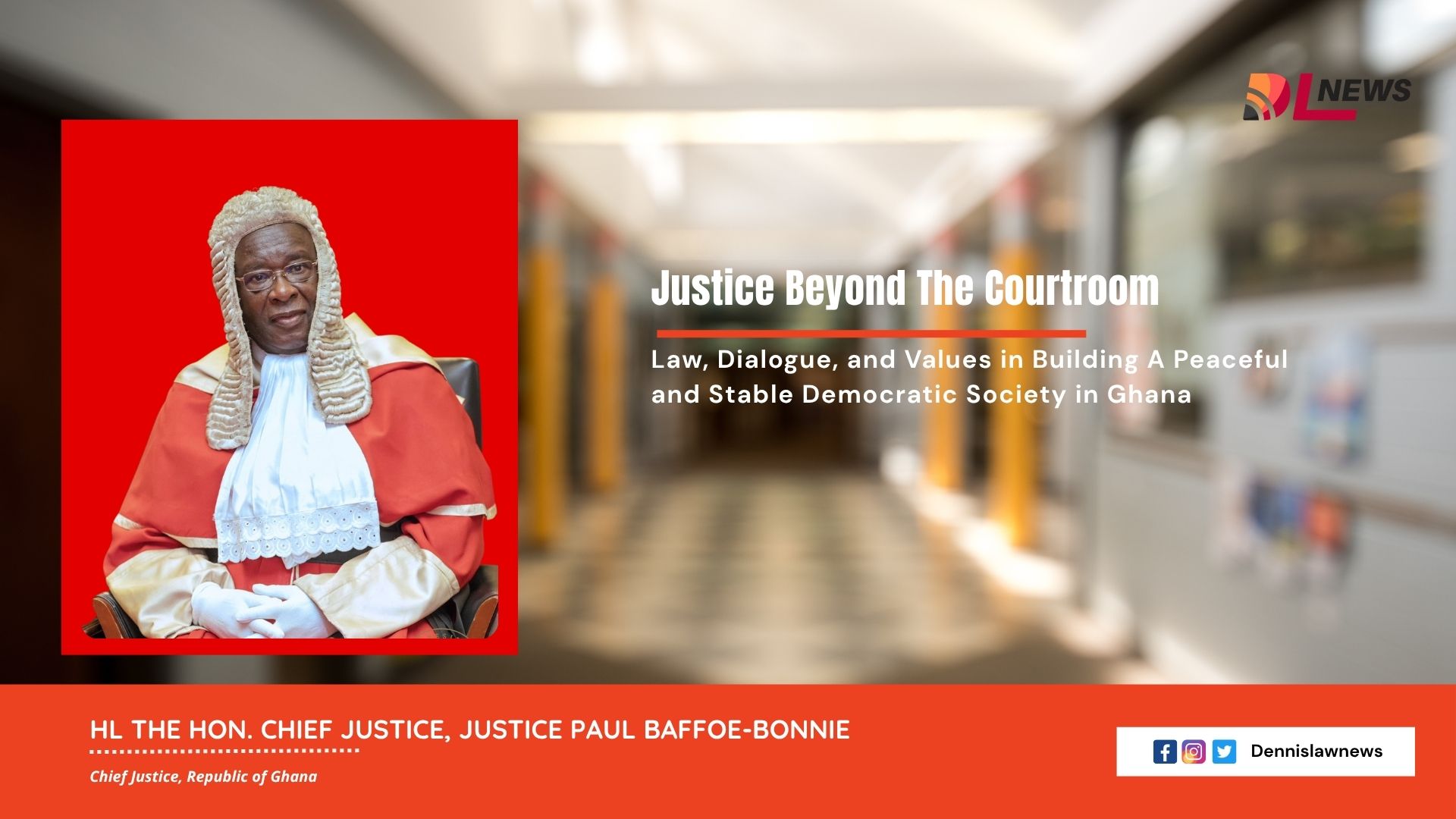
Justice Beyond The Courtroom: Law, Dialogue, and Values in Building A Peaceful and Stable Democratic Society in Ghana
Justice Paul Baffoe-Bonnie

Opinion
The Death of a Profession?
Following the Chief Justice's decision to refer Dr. Dominic Ayine to the General Legal Council over his comments in the aftermath of the Election Petition, the author explores the implications for the legal system and the freedom with which...
Francisca Serwaa Boateng

Opinion
Land Management as a component of Sustainable Development: The role of traditional leadership in the Kumasi Traditional Area
A lecture delivered at the KNUST Law Faculty on 23rd March, 2023
Mariam Agyeman Gyasi Jawhary
Opinion
Harmonizing Customary Practices and Statutory Law: The Need to Amend Ghana’s Criminal Offences Act, 1960 (Act 29) to Recognize and Enforce Customary Offences and Sanctions Across Ghanaian Communities
This article argues that whilst Ghana’s statutory criminal law (via the Criminal Offences Act 1960 (Act 29) governs codified offences, it fails to formally recognise many customary offences and sanctions entrenched in Ghanaian communities....
Kofi Annan and Nana Adwoa Serwaa Dua-Adonteng Esq.

Opinion
‘Robo-Justice’: A Critical Examination of Artificial Intelligence (AI) Adoption in Ghana’s Legal System
The article explores how AI is reshaping Ghana's legal system, emphasizing both its efficiency benefits and the ethical and procedural risks it poses. It concludes that while AI can aid legal processes, it cannot replace human judgment, and...
Elizabeth Asantewaa Ofori and Goodnuff Appiah Larbi

Opinion
The Ghana School of Law Internship Programme: A call for urgent reform
The article argues that the Ghana School of Law’s current two-day-per-week internship model fails to satisfy the statutory six-month internship requirement and undermines meaningful practical legal training. It calls for a return to full-ti...
Dennis Adjei Dwomoh

Opinion
The Judicial Powers of the Judicial Committee of a Traditional Council
This article examines the judicial powers of the Judicial Committee of a Traditional Council in Ghana, outlining its composition, jurisdiction, appointment process, and adjudicatory functions in chieftaincy disputes. It also discusses appea...
Richard Appiah Kubi
Opinion
Entrapment in Investigative Journalism, Uncovering the Truth or Distorting Reality? - A Case Study of His Lordship Justice Paul Uuter Dery & 2 ors vrs The Republic of Ghana Suit No: ECW/CCJ/APP/42/16 (Ecowas Community Court of Justice)
This article critically examines the ethical and legal implications of using entrapment in investigative journalism, focusing on a case involving Ghanaian judges accused of corruption following an undercover investigation by journalist Anas...
Nii Kpakpo Samoa Addo Esq

Opinion
The Legal Education Act, 2026 Does Not Abolish Entrance Examinations
The article argues that Ghana’s Legal Education Act, 2026 (Act 1170) does not abolish entrance examinations for professional legal training. Instead, it preserves entrance examinations while shifting legal education from a monopoly model to...
Dennis Adjei Dwomoh

Opinion
‘Article 71’ Office Holders and Retiring Emoluments, When Ex Gratia Meets Nemo Dat Quod Non Habet, Russia-Ukraine War, and during Debt Exchange – Reflections of a Citizen, Not a Spectator!!!
The article explores the subject of ex gratia paid to Article 71 office holders and questions its relevance under Ghana's socioeconomic situation and the legal principle of Nemo Dat Quod Non Habet
Frederick Gurah Sampson
Opinion
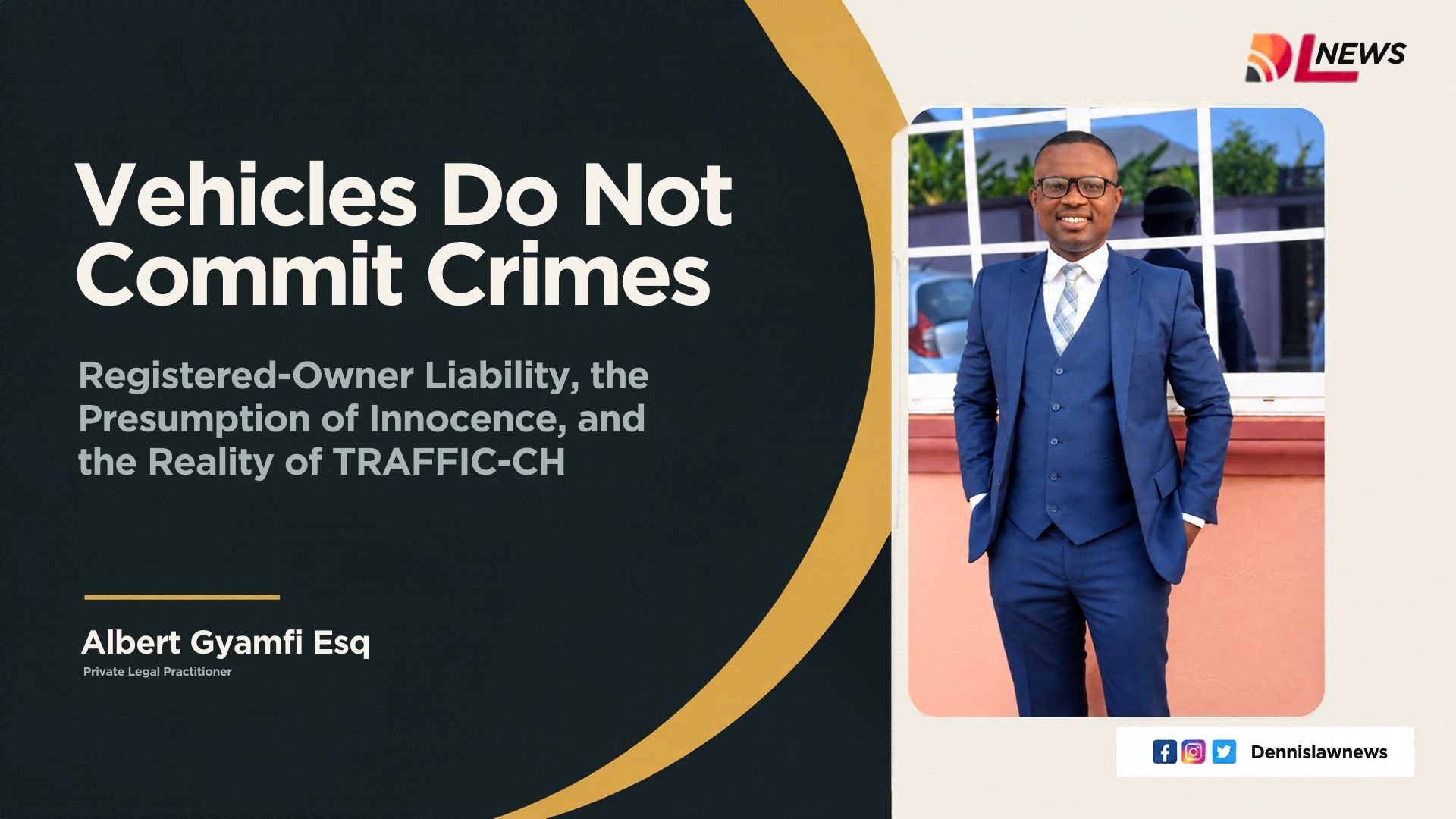
Vehicles Do Not Commit Crimes: Registered-Owner Liability, the Presumption of Innocence, and the Legality of TRAFFITECH-GH
The article challenges the legality of Ghana’s TRAFFITECH-GH system, arguing that registered vehicle owners cannot automatically be held criminally liable for traffic offences committed by others. It contends that such liability violates th...
Albert Gyamfi Esq.
Opinion
The Ineffectiveness of Criminal Prosecution in Tax Recovery in Ghana: Insights from the Case of The Republic v. Warren Oil Company Limited
This article examines the limitations of criminal prosecution in recovering unpaid taxes in Ghana, using the case of The Republic v. Warren Oil Company Limited as a focal point. It argues that the punitive measures in the Revenue Administra...
Rebecca Eduafo-Abraham, Esq.

Opinion
My Lord! To be or not to be? [Part 1]
This article examines the process of becoming a judge in Ghana, outlining the recruitment procedures, conditions of service, postings, transfers, leadership expectations, and the exclusivity of judicial roles. It provides insights into the...
Bertha A. Aniagyei
Opinion
Access Versus Standards: The Future of Legal Education in Ghana
The article examines Ghana’s 2026 legal education reforms, arguing that widening access to professional legal training must be matched with strong regulation, transparent bar examinations, adequate teaching capacity, and sustained professio...
Justice Kweku T. Ackaah-Boafo
Opinion
Conviction and Sentence in Absentia; Effective Date Of Sentence, Settling The Uncertainty; The Case Of Sedina Tamakloe-Attionu, Former Masloc CEO
The article examines whether a sentence imposed in absentia begins from the date it is pronounced or from when the convicted person is brought into custody. Using the Sedina Tamakloe-Attionu case, the author argues that a purposive reading...
Frederick Gurah Sampson
Opinion
The departure which must itself be departed from-Comment on the Supreme Court Decision of GHANA TELECOMMUNICATIONS CO. LTD & ANOR v ATTA VI.
This writer submits that the Ogyeadom case could never, as perceived by the Court, have settled the question whether or not the Court is jurisdictionally competent to entertain and grant an application for stay of execution pending the dete...
Thaddeus Sory

Opinion
Blue Law: An Insight
The interesting subject of Blue laws is the focus of this article, including its applications in Ghanaian law
Justice Alexander Osei Tutu