Court grants OSP bid for secret testimony in Charles Bissue galamsey trial
By DL News
Published
3 min read
Sitting at the Criminal Division, Justice Audrey Kocuvie-Tay on Tuesday upheld an application for the OSP’s key witness to give evidence in camera.
The High Court in Accra has authorised the Office of the Special Prosecutor (OSP) to shield its first witness in the corruption case involving former Inter-Ministerial Committee on Illegal Mining (IMCIM) secretary, Charles Cromwell Nanabanyin Onuawonto Bissue, and two others.
Sitting at the Criminal Division, Justice Audrey Kocuvie-Tay on Tuesday upheld an application for the OSP’s key witness to give evidence in camera, after the prosecution warned that public exposure of his identity could place his life in serious danger.
Under the ruling, the undercover operative, identified in court records as Benjamin Agyepong, will testify privately, without the usual public access to proceedings. Prosecutors argued that the security risks are heightened given the violence and entrenched economic interests associated with the multi-billion-dollar illegal mining (galamsey) economy.
The case centres on three former IMCIM officials who are facing a combined eight counts linked to corruption and the misuse of public office:
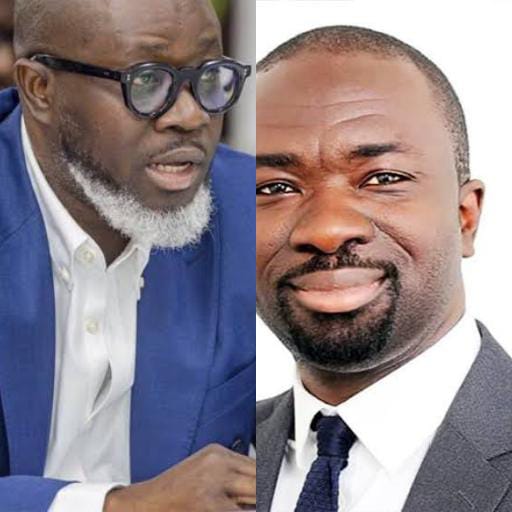
Charles Cromwell Nanabanyin Onuawonto Bissue (First Accused) – former IMCIM Secretary, charged with six counts of corruption and abuse of public office, including agreeing to let his conduct in public office be influenced for private gain.
Raphael Mensah (Second Accused) – former Systems Manager for the GalamStop software, charged with abetment of corruption and use of public office for profit.
Dr Naa Dedei Tagoe (Third Accused) – former Project Coordinator at the IMCIM, charged with abetment of corruption.
All three have entered pleas of not guilty.
Prosecutors allege that the accused circumvented IMCIM procedures to favour a company regarded as unqualified, in a case that traces back to the “Galamsey Fraud Part I” documentary produced by investigative outfit Tiger Eye P.I.
Counsel for the accused mounted a strong objection to the OSP’s in-camera request. They challenged both the necessity for shielding the witness and the claimed risk profile, and went further to question the legitimacy of the undercover investigator’s employment status.
The defence team also resisted a separate bid by the prosecution to have a journalist involved in the investigative documentary called as a witness.
They argued that open justice and public access to trials are core constitutional guarantees that should not be limited without compelling justification.
In her ruling, Justice Kocuvie-Tay cited Article 19(5) of the 1992 Constitution and Section 102 of the Courts Act, which allow courts to exclude the public from proceedings where necessary to protect the safety of those involved.
The matter has been adjourned to 12 January 2026, when the trial is expected to proceed under the enhanced security arrangements.
The prosecution forms part of a broader effort by the OSP to pursue high-level corruption cases connected to illegal mining. Mr Bissue has previously failed in legal attempts to stop both his arrest and the OSP’s investigation, placing this trial under particularly close public scrutiny.
Illegal mining continues to impose severe costs on Ghana’s economy and environment, including:
contamination of major water bodies;
destruction of cocoa farms and other farmlands; and
the loss of revenue that could otherwise support public services.
The OSP has argued that these systemic risks, combined with the violent nature of some galamsey operations, justify extraordinary protective measures for witnesses—especially in light of past attacks on anti-corruption actors, including the murder of investigative journalist Ahmed Suale.
The stakes are both legal and socio-economic. Successfully recovering resources lost through corruption could help address fiscal gaps that impact everyday citizens. For example, funds reclaimed from such prosecutions could be channelled into priorities like the immediate employment of thousands of unposted graduate nurses and midwives, whose association is currently preparing protests after years of unemployment.
Against that backdrop, the Bissue trial—and the decision to protect the undercover witness—has become a litmus test of Ghana’s resolve to secure credible, high-impact outcomes in complex corruption and galamsey-related cases.